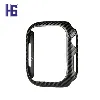
Carbon fiber, a revolutionary industrial material developed in the last century, offers four times the tensile strength of steel at just a quarter of the weight. With additional advantages like low friction and exceptional wear resistance, it has become a top-tier material across defense, aerospace, medical, sports, and industrial sectors. Since most carbon fiber products require custom molds, this article explores key mold design principles.

Critical Mold Design Considerations
Optimal Parting Line Selection: The parting line defines the mold's structural form. For symmetrical components, the central plane typically serves as the ideal parting surface-requiring no additional machining or finishing.
Semi-Enclosed Structure: Standard molds incorporate matched dies (male/female cores) and inserts. Some designs include outer sleeves to guide die alignment during closure.
Ejection System Design: Without a precision ejection mechanism, even perfectly molded parts risk damage during removal. Carbon fiber's high strength, rigidity, and low thermal expansion make room-temperature demolding particularly challenging-often necessitating heated molds.
Surface & Material Standards: Steel or aluminum molds must feature ultra-smooth cavities (low roughness) and remain contaminant-free.
Molding Process Essentials
Quality parts demand more than precision molds-they require rigorously controlled processes:
Engineers perform ply count calculations based on design specifications.
Variable cross-sections and thicknesses necessitate iterative testing to finalize layup sequences.
Verified preforms are then loaded into molds for curing.
Both mold engineering and process control directly determine final product quality.
High Gain Industrial Co., Ltd. leverages deep expertise backed by a doctorate-level R&D team. We deliver custom carbon fiber solutions including:
• UAV components
• High-speed rail parts
• Automotive elements
• Mechanical structural assemblies
Design-to-production services available from technical drawings.