Advantages of Carbon Fiber Plates Over PVC Plates
Carbon fiber and PVC plates are commonly used materials for various products. However, there are significant differences between the two materials. Carbon fiber plates are known for their strength, durability, and lightweight, while PVC plates are budget-friendly and versatile. In this article, we will compare carbon fiber plates with PVC plates and explore the advantages of using carbon fiber plates for products.
Firstly, carbon fiber plates are stronger and more durable than PVC plates. Carbon fiber plates are made of tightly woven carbon fibers that are highly resistant to impacts and can withstand high levels of stress. On the other hand, PVC plates are made of synthetic plastic, which can get brittle over time and crack under pressure. Carbon fiber plates have high tensile strength, meaning they can withstand a greater amount of force before breaking or deforming, while PVC plates have lower tensile strength and can break or deform easily.
Secondly, carbon fiber plates are lightweight, making them an excellent choice for products that need to be maneuverable or portable. Carbon fiber plates are almost five times lighter than PVC plates, making them ideal for applications that require weight reduction. For example, racing bicycles, drones, and aerospace applications use a lot of carbon fiber plates because of their lightweight and strength. In comparison, PVC plates are generally heavy, and many products that use PVC plates can become bulky and cumbersome.
Another significant advantage of carbon fiber plates is their resistance to corrosion, unlike PVC plates. Carbon fiber plates are naturally resistant to moisture and corrosion, making them suitable for products that are exposed to harsh environments and weather conditions. PVC plates, on the other hand, are prone to deterioration when exposed to moisture or sunlight for extended periods. This makes carbon fiber plates a better choice for products that will be exposed to outdoor or harsh environments.
Furthermore, carbon fiber plates offer a higher modulus of elasticity compared to PVC plates. This means they can be flexed and bent without deforming. This makes them perfect for products that will experience bending, such as wind turbine blades, chassis supports, and prosthetics. Carbon fiber plates can also be molded into various shapes, making them an ideal choice for complex products.
Lastly, carbon fiber plates provide a better aesthetic and finishing compared to PVC plates. Carbon fiber plates have a shiny, sleek finish that gives a sophisticated look to any product. They are usually used for high-end products that require a sleek and modern design. PVC plates, on the other hand, have a rougher and duller finish, making them less suitable for products that require a polished and sophisticated look.
In conclusion, carbon fiber plates offer many advantages over PVC plates. Carbon fiber plates are stronger, more durable, lightweight, resistant to corrosion, provide better elasticity, and better aesthetics. Therefore, if you are designing a high-performance product, such as a drone, car, airplane, or prosthetic, then carbon fiber plates are the best choice. While PVC plates may be more budget-friendly and versatile, they cannot match the performance and durability of carbon fiber plates.
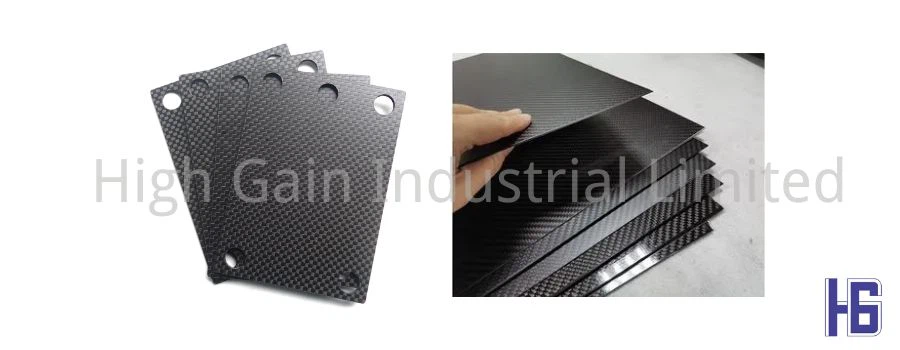
High Gain is professional manufacturer of carbon fiber plates that we have molds can produce CF plates in various thickness and sizes. We are also able to make carbon fiber honeycomb sandwich panels to satisfy your need of reducing weight yet maintaining the strengths.