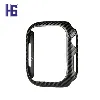
As a high-performance structural material, carbon fiber products find applications across aerospace, medical devices, rail transit, and automotive industries. Compression molding stands as the predominant manufacturing process, and this article outlines its key benefits.
The compression molding process leverages distinct stages of resin curing: material flows to fill mold cavities, followed by resin solidification. During cavity filling, both resin and reinforcing fibers undergo flow dynamics, necessitating higher pressure than alternative methods. This high-pressure technique requires both pressure-controlled hydraulic presses and precision metal molds capable of withstanding elevated temperatures while maintaining structural integrity.
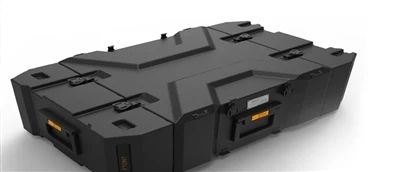
Core advantages of compression molding:
- Minimal material waste (typically 2-5% of product weight)
- Low internal stress with negligible warpage, ensuring stable mechanical properties
- Reduced mold wear and simplified mold structures
- Lower equipment costs compared to injection/transfer molding tools
- Capability to produce large flat components limited only by press clamping force and platen size
- Consistent shrinkage rates with high dimensional repeatability
- High productivity through multi-cavity mold configurations
- Excellent surface finish eliminating secondary processing
- Capacity to form complex geometries in single operations
- Cost-effectiveness for volume production
High Gain Industrial Co., Ltd., a professional carbon fiber manufacturer, operates comprehensive facilities including large-scale hot presses, autoclaves, hydraulic forming stations, and CNC high-speed milling machines. All products utilize premium raw materials from renowned Taiwanese and Japanese brands, guaranteeing superior quality.