Advantages of using autoclave to produce aftermarket carbon fiber autoparts than using vacuum bagging
Carbon fiber is a strong, lightweight material that has become increasingly popular in the production of aftermarket auto parts. However, there are two primary methods for producing carbon fiber parts: autoclaving and vacuum bagging. While both methods have their benefits, there are many advantages to using an autoclave to produce carbon fiber parts.
The primary advantage of autoclaving is the ability to produce parts that are consistent in quality and strength. Autoclaving involves the use of high-pressure and high-temperature environments to cure the carbon fiber. This process ensures that the carbon fibers are uniformly distributed and that there are no voids or air pockets in the part. As a result, the final product is incredibly strong and lightweight.
Vacuum bagging, on the other hand, is a more manual process that involves laying out carbon fiber fabric in a mold and applying a vacuum bag over the top. While vacuum bagging can produce high-quality parts, it is more difficult to achieve the same level of consistency as autoclaving. Each layup can have variations in the amount of resin used and how tightly the vacuum bag is applied, which can lead to inconsistent parts.
Another advantage of autoclaving is the ability to produce complex parts that are difficult or impossible to create using vacuum bagging. Autoclaving allows for the production of parts with intricate shapes and curves, as the high-pressure environment can compress the carbon fibers into complex molds. Vacuum bagging, on the other hand, may result in wrinkles or imperfections in the carbon fiber when trying to create complex parts.
Autoclaving is also a more efficient process than vacuum bagging. Autoclaves can produce parts in a shorter amount of time, which can save manufacturers money on labor and energy costs. Additionally, autoclaving produces less waste than vacuum bagging, as there is no excess resin or vacuum bag material to dispose of.
Finally, autoclaving can result in a higher-quality finish on the final product. Autoclaving ensures that the carbon fibers are evenly distributed throughout the part, which can lead to a smoother finish. Vacuum bagging, on the other hand, may result in imperfections in the final product.
In conclusion, while both autoclaving and vacuum bagging are viable methods for producing aftermarket carbon fiber auto parts, the advantages of autoclaving are hard to ignore. Autoclaving produces consistent, strong, and lightweight parts that are more efficient to produce and easier to mold into complex shapes. As a result, autoclaving is the preferred choice for manufacturers who demand high-quality carbon fiber parts.
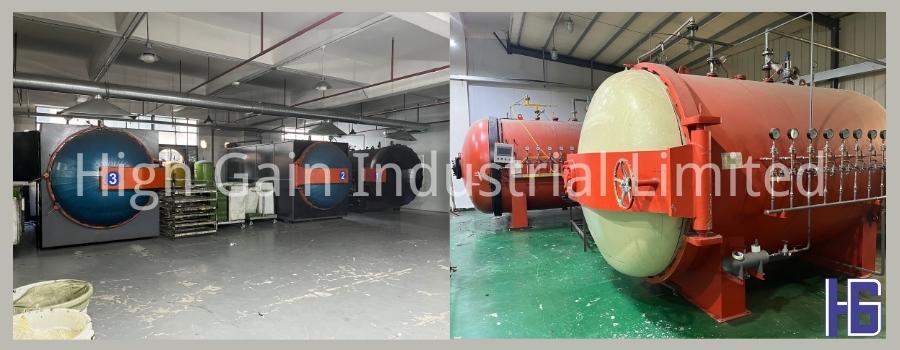
High Gain produces carbon fiber auto parts with autoclave. Using the autoclave can maintain the products’ quality and reduce the total weight that is suitable for all the customers who aim at decorating their automotives.