Advantages of Using Carbon Fiber Towpreg for Filament Winding
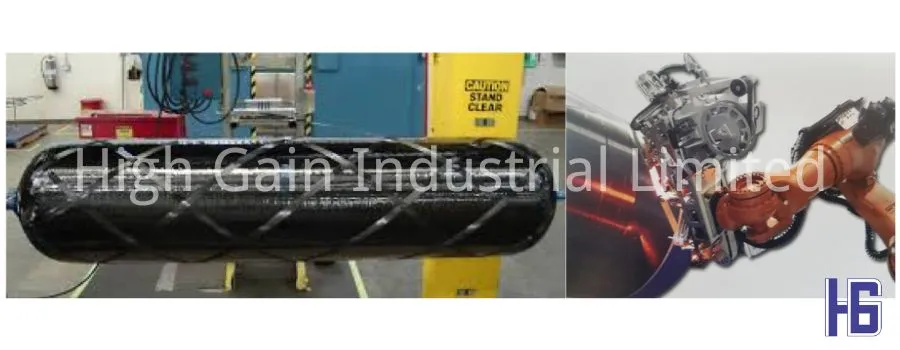
Carbon fiber is an incredibly strong and lightweight material that is widely used in many industries, including aerospace, automotive, and sporting goods. One of the main methods for manufacturing carbon fiber composites is through filament winding, which involves wrapping continuous fibers around a mandrel to create a three-dimensional shape.
Traditionally, filament winding has employed a wet method in which the carbon fibers are impregnated with resin during the winding process. However, in recent years, a technology known as carbon fiber towpreg has gained popularity as a more efficient and cost-effective way to manufacture carbon fiber composites.
Towpreg is a pre-impregnated carbon fiber that is coated with resin before being wound onto the mandrel. This process offers several distinct advantages over the wet method in which the fibers are immersed in a resin bath.
1. Consistent Resin Content
With towpreg, the resin content is accurately controlled, providing a consistent and repeatable composite structure. This is in contrast to the wet method, which can lead to variability in the resin content due to factors such as fiber wetting and resin flow.
2. Improved Quality
By controlling the resin content, towpreg can produce a more uniform and higher quality composite structure. This leads to improved mechanical properties such as strength, stiffness, and toughness.
3. Lower Waste
Towpreg can significantly reduce waste compared to the wet method. With the wet method, excess resin is typically left on the mandrel and discarded, leading to a higher material usage and cost. With towpreg, the resin content is tailored to the exact requirements of the composite structure, leading to minimal waste.
4. Faster Production
Towpreg can significantly speed up the production process relative to the wet method. With towpreg, the pre-impregnated fiber can be directly wound onto the mandrel without the need for additional resin application steps. This results in faster production times and higher throughput.
5. Lower Environmental Impact
By minimizing waste and reducing material usage, towpreg has a lower environmental impact than the wet method. Additionally, towpreg can reduce the emission of volatile organic compounds associated with the wet method.
In conclusion, the use of carbon fiber towpreg offers significant advantages over the traditional wet method in which fibers are impregnated with resin in a bath. By providing consistent resin content, improving quality, reducing waste, speeding up production, and lowering environmental impact, towpreg is rapidly becoming a popular choice for filament winding applications.