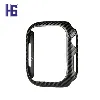
Analyze the characteristics of carbon fiber materials
Carbon fiber, as an emerging structural material, has been widely applied in various fields. However, most people are not familiar with the characteristics of carbon fiber materials. This article aims to provide a comprehensive introduction to carbon fiber materials, hoping to deepen everyone's understanding of carbon fiber.
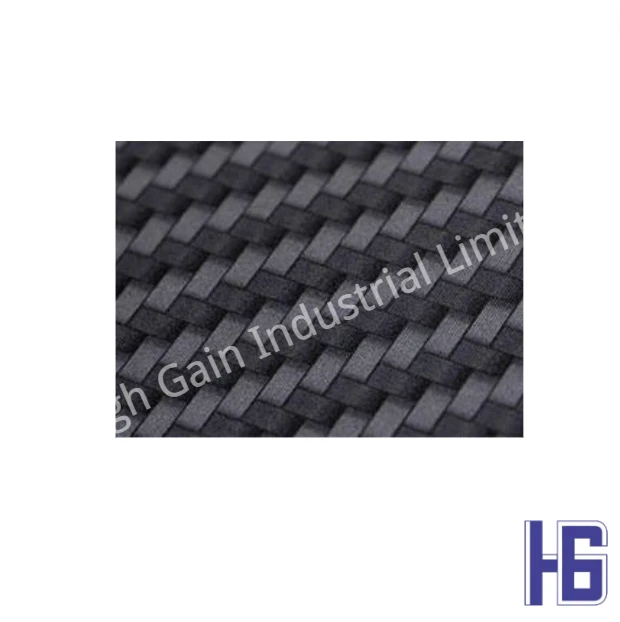
The most well-known advantage of carbon fiber materials is their high strength and lightweight nature.
Carbon fiber materials have a density of only 1.7 g/cm3, which is less than one-fourth of steel. However, their tensile strength can reach over 3000 MPa, which is several times higher than that of steel. The specific strength and modulus of carbon fiber surpass those of traditional structural materials, allowing for lightweight design while still meeting the required strength criteria. Moreover, carbon fiber is an anisotropic material, with different strengths along and perpendicular to the fiber axis. This characteristic allows for the optimal design of carbon fiber composites by arranging the layers in a strategic manner.
Although the thermal conductivity of carbon fiber is lower compared to metals, it is significantly higher than that of common organic and polymer materials. This property makes carbon fiber suitable for applications such as solar collectors, materials with uniform heat transfer, and high-temperature working environments. Carbon fiber exhibits low thermal expansion coefficients, meaning it has minimal deformation with changes in temperature, ensuring dimensional stability.
Being a non-metallic material, carbon fiber possesses excellent resistance to general organic solvents, acids, and alkalis. This property enables carbon fiber products to be used in various working environments and extends their service life.