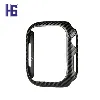
Carbon fiber, as an emerging material, has surpassed traditional metallic materials. It is a composite material made of carbon fiber reinforced resin and other high performance materials, which gives it superior mechanical properties. What are these mechanical properties?
The primary difference between carbon fiber and metal materials lies in their structural properties. Metals typically have a fixed strength, whereas carbon fiber, as an anisotropic material, exhibits different properties parallel and perpendicular to its fiber direction. This anisotropy allows for optimized performance through strategic layup design. For example, carbon fiber sheets with different layup angles exhibit different mechanical behaviors.
The commonly used T300 carbon fiber has a tensile strength of up to 3500 MPa, far exceeding that of steel and most structural materials. It also has flexural and shear strengths that many metals lack. In terms of specific strength and specific modulus, carbon fiber composites lead existing structural materials, making them ideal replacements for steel, aluminum alloys, and magnesium alloys.