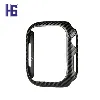
Carbon fiber is an important material for automotive lightweighting.
For many industries that require lightweight solutions, carbon fiber is often the material of choice. By using carbon fiber to manufacture products, they achieve the desired lightweight effect. With the rapid development of the automotive industry, not only has technological advancement improved driving performance, but material improvements have also contributed to achieving lightweighting. This article will explore the reasons for choosing carbon fiber for automotive lightweighting.

Carbon fiber materials possess mechanical advantages such as high specific strength and high specific modulus, which significantly surpass many metal materials. Additionally, carbon fiber exhibits excellent corrosion resistance and fatigue resistance, providing substantial benefits in automotive applications.
The lightweight nature of carbon fiber can enhance vehicle acceleration performance, improve driving dynamics, and reduce energy consumption while lowering emissions. According to data from 2019, the number of vehicles in China reached 320 million, and environmental requirements for automobiles have become increasingly stringent. This necessitates lightweight solutions to better meet emission standards.
In practical applications, it has been observed that reducing a vehicle's overall weight by 10% can yield about a 7% improvement in fuel economy. For instance, if a vehicle's weight decreases by 100 kg, the fuel consumption can be reduced by approximately 0.51 liters per 100 kilometers, leading to lower operating costs and improved environmental performance.
Moreover, the fatigue resistance and corrosion resistance of carbon fiber materials contribute to enhanced safety during vehicle operation. In the event of a collision, carbon fiber provides better protective measures, and its corrosion-resistant properties prevent rusting, thereby extending the overall lifespan of the vehicle. These factors are key reasons why the automotive industry places a high value on the performance advantages of carbon fiber materials.
There are numerous products made from carbon fiber for weight reduction in automotive applications, such as carbon fiber radiator core supports, carbon fiber engine hoods, carbon fiber fenders, carbon fiber fairings, carbon fiber bonnets, carbon fiber door frames, carbon fiber seats, carbon fiber roofs, carbon fiber interior panels, and carbon fiber luggage compartments. In many high-performance vehicles, utilizing carbon fiber can achieve a weight reduction of 200-300 kg, resulting in significant advantages.