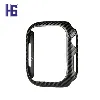
Carbon fiber thermoplastic sheets are not only aesthetically pleasing and high quality, but also five times stronger than steel. They also offer excellent heat resistance, wear resistance and corrosion resistance, making them highly practical for the shells and accessories of many high-end products. At present, there are only a few products on the market that use thermoplastic carbon fiber sheets, and the technology is still in its infancy. Compared with the traditional thermoset carbon fiber sheets, thermoplastic carbon fiber sheets are more environmentally friendly and recyclable, overcoming the irreversible processing problem of thermoset sheets. Thermoplastic sheets can be softened or melted into any shape under certain temperatures and can retain their shape after cooling, reducing processing steps and manufacturing time, thus increasing their market value.
Due to the significant advantages of carbon fiber thermoplastic sheets, many high-end products are beginning to use them. However, the high forming temperature, great difficulty and high mold requirements of carbon fiber thermoplastic sheets remain challenging. Wuxi Zhi Shang New Material Technology Co., Ltd., which is dedicated to high-end carbon fiber research, has developed a complete carbon fiber thermoplastic production line under the leadership of Dr. Li Sanping's R&D team. The following is an introduction to the injection molding process of thermoplastic carbon fiber sheets.
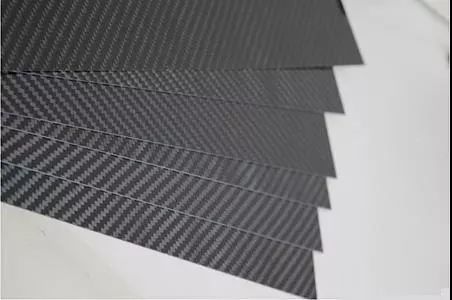
Injection molding, a process that combines injection and compression molding, is widely used for thermoplastics. The process involves placing polymer granules in the barrel of an injection molding machine. Heating, compression, shearing, mixing, and conveying are used to uniformly mix and melt (plasticize) the material. The molten plastic is then injected by a piston or screw into a closed, cool mold cavity. After cooling and solidification, the mold is opened and the product is ejected. This process is efficient, automated, and suitable for complex, precise plastic parts with inserts, which account for about 30% of all plastic products. Recent advances include micro-injection, composite injection, low-pressure high-speed injection, computer-aided injection, and energy conservation.
Understanding melt flow behavior is critical to the design of injection molding processes, as filling speed, pressure, and temperature greatly affect flow and filling. The process has three main stages: plasticizing metering, injection molding, and cooling. It is cyclical and periodic, with mold closing, filling, holding, cooling, opening, and ejection occurring in each cycle. The three key steps that affect product formation are melt filling, holding, and cooling.