Comparison and Differences Between Carbon Fiber Sheets and PVC Sheets
Many people compare carbon fiber sheets and PVC sheets, unsure of which one to choose. They hope for an analysis comparing these two types of materials. As a professional manufacturer of carbon fiber products, we have produced numerous carbon fiber sheet products. Our customers often provide feedback based on their actual usage regarding the comparison between carbon fiber sheets and PVC sheets. In this article, we aim to provide a targeted comparison that we hope will be helpful.
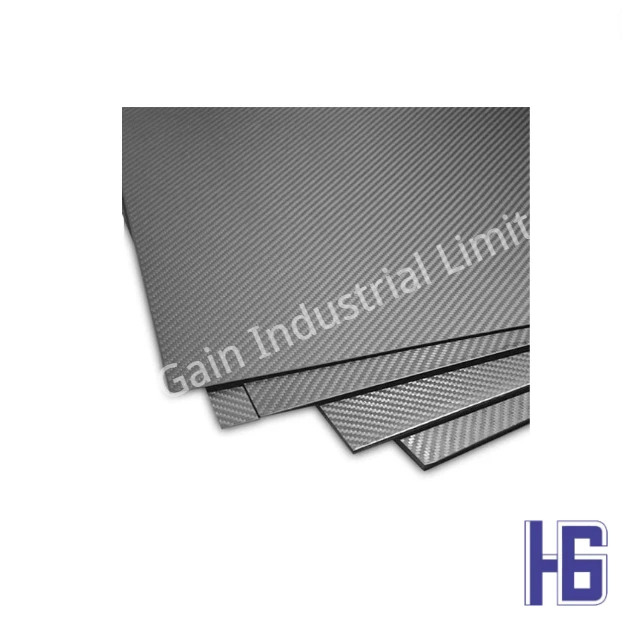
Carbon fiber sheets are made from carbon fiber prepreg material, which is layered and then cured at high temperatures to form the final product. To ensure the performance advantages of carbon fiber sheets, it is essential to pay attention to the angle of the layers during the stacking process, which enhances the strength and shear resistance of the sheets. In contrast, PVC sheets are made from raw PVC materials in a honeycomb structure, resulting in significant differences in both raw materials and manufacturing processes.
Let's start with carbon fiber sheets. They are processed from carbon fiber bundles containing over 90% carbon content fused with resin. This combination results in a new composite material with high strength and modulus, providing outstanding advantages compared to metal materials. The density of the entire carbon fiber prepreg is around 1.7 g/cm³, and its strength can reach up to 3000 MPa, making it the preferred choice for many high-performance products that require weight reduction.
The high strength, lightweight nature, excellent acid and corrosion resistance, high-temperature tolerance, low thermal expansion coefficient, and good X-ray permeability make carbon fiber sheets advantageous applications even when compared to metal sheets. They have a strong market presence in industries such as aerospace and medical fields.
On the other hand, PVC sheets are made from PVC, a type of plastic material composed of polyvinyl chloride resin, plasticizers, and stabilizers. While this material has relatively high strength, it can release toxic substances at high temperatures. Common applications of PVC are primarily in lower-end products, such as sheets, toys, and stationery, where the operating environment does not involve high temperatures.
Comparatively, the advantages of carbon fiber sheets lie in their high strength, structural stability, superior high-temperature performance, corrosion resistance, abrasion resistance, and excellent X-ray permeability. However, they have drawbacks, including low production efficiency, requiring full manual production, and higher costs.
In contrast, PVC sheets have weaker mechanical properties and lower high-temperature resistance than carbon fiber sheets, but they come at a lower price point, making them more economically advantageous. The manufacturing process for PVC is well-established, allowing for quick mass production at a low cost, facilitating wider product distribution. PVC sheets are commonly used in various packaging applications, while carbon fiber sheets are more prevalent in high-end industries, indicating that their application environments differ significantly.