Customization and Tensile Performance Enhancement of Carbon Fiber Components
Carbon fiber components, renowned for their lightweight nature, exceptional strength, and resistance to corrosion, are widely employed in a spectrum of industries including aerospace, automotive, and electronics. To fully exploit their potential, it is imperative to not only select the appropriate raw materials but also to meticulously tailor the manufacturing process. In this article, we delve into the customized production of carbon fiber components and the critical factors that influence their tensile performance, with insights from Zhishang New Material Technology Company.
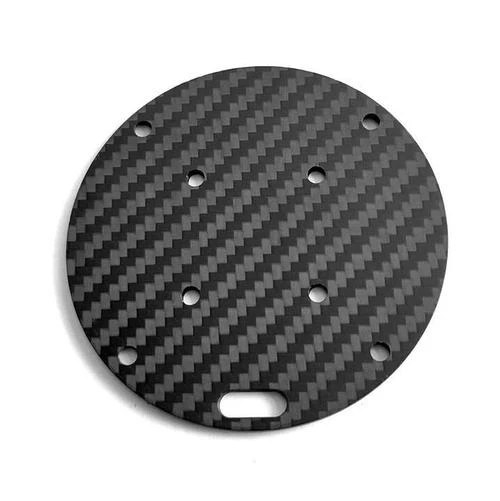
The Imperative of Customized Production
Meeting Diverse Needs: Industries have specific demands for carbon fiber components. Aerospace seeks materials that are lightweight and robust, while the automotive sector looks for materials with resistance to impacts and corrosion. Customized production can address these unique needs by fine-tuning the orientation and density of carbon fibers, thereby significantly boosting the components' strength and rigidity.
Boosting Cost-Effectiveness: Customized production allows for the precise cutting and processing of carbon fiber prepreg, minimizing material waste and enhancing material utilization. Moreover, by streamlining production processes and eliminating superfluous steps, production costs can be effectively reduced.
Ensuring Quality Assurance: Customized production guarantees the uniformity and reliability of each component, preventing quality issues stemming from batch-to-batch variations. Meticulous documentation of the production process and material sourcing facilitates the traceability and resolution of quality concerns.
Advancing Technological Innovation: Customized production spurs the development and application of innovative materials, driving technological progress. High-quality customized products bolster a company's brand reputation and foster trust among customers.
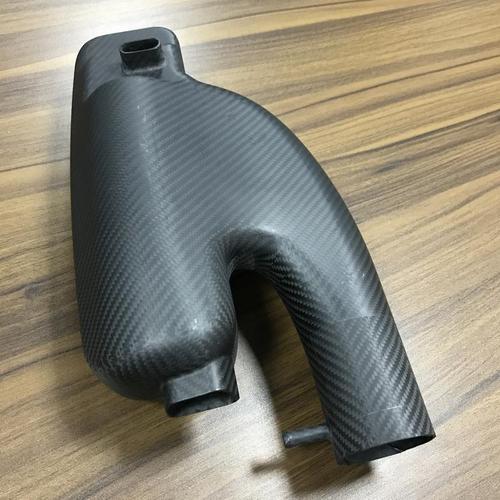
Influential Factors on Tensile Performance
When tailoring carbon fiber components, the following factors are pivotal to ensuring their performance:
Raw Material Selection: Varying grades of carbon fiber and resin matrix display significant performance disparities. For instance, the M-series carbon fiber boasts superior modulus compared to the T-series, and components crafted with 504 resin exhibit greater tensile strength than those made with E44 epoxy resin. Selecting the most cost-effective composite material raw materials based on specific application requirements, including high-temperature resistance, wear resistance, and fire resistance, is crucial. During the product consultation phase at Zhishang New Materials, understanding the precise application needs is essential for determining the appropriate raw materials.
Interface Treatment: The interface layer between carbon fiber and resin matrix plays a critical role in the tensile performance of composite materials. An ideal interface layer should be uniform and intact, devoid of voids. Sizing agents, which are the primary constituents of the interface layer, can enhance the bond strength between carbon fiber and resin, mitigating fiber damage during processing. An optimal amount of sizing agent can substantially strengthen the interface bond.
Curing Temperature: Curing temperature is a pivotal process parameter that affects the tensile performance of carbon fiber components. Inadequate temperature can result in incomplete resin curing, while excessive temperature can increase resin rigidity, thereby reducing tensile strength. Precise control of the curing temperature is essential for enhancing component performance.
Hole-Making Process: The hole-making process significantly impacts the tensile strength of carbon fiber components. An increase in hole diameter reduces the cross-sectional area capable of withstanding tension, thereby diminishing tensile strength. Circular holes, with their smooth edges, induce less stress concentration compared to square holes, which are prone to stress concentration at the corners, leading to cracking. It is advisable to opt for circular holes when necessary, with the smallest feasible diameter.
Working Environment: Temperature fluctuations and humidity in the working environment significantly affect the tensile performance of carbon fiber components. The interplay of high-low temperature cycles and humidity-load can accelerate the propagation of interface cracks, reducing tensile strength. By choosing suitable raw materials and optimizing the working environment, these detrimental effects can be significantly mitigated.
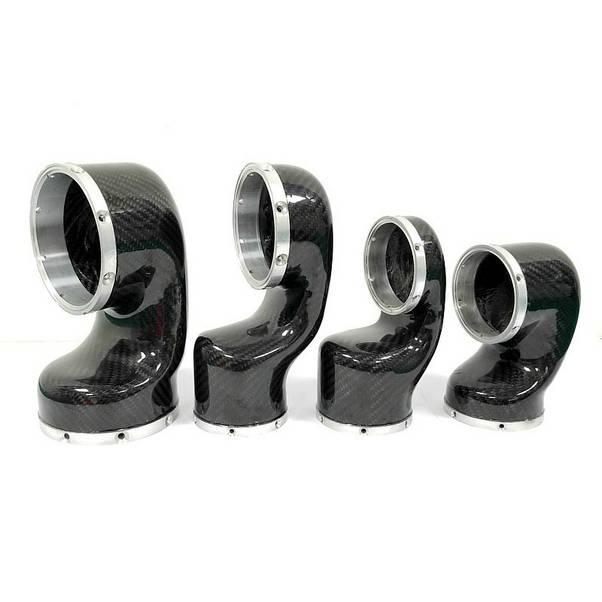
Customized production of carbon fiber components not only caters to the diverse needs of various application fields but also significantly enhances the tensile performance of components by optimizing factors such as raw material selection, interface treatment, curing temperature, hole-making process, and working environment. As technology continues to evolve and market demands diversify, customized production of carbon fiber components will become increasingly prevalent and efficient, offering robust support for innovation across a wide range of industries.