Does the toughening treatment of thermoplastic carbon fiber help to enhance its performance limits?
Currently, thermoplastic carbon fiber composites are an important direction in the field. However, the preparation of thermoplastic carbon fiber is highly challenging and requires certain modification treatments for both carbon fibers and thermoplastic resins to better facilitate large-scale production and application of thermoplastic carbon fibers. This article will introduce relevant knowledge about the toughening treatment of thermoplastic carbon fiber.
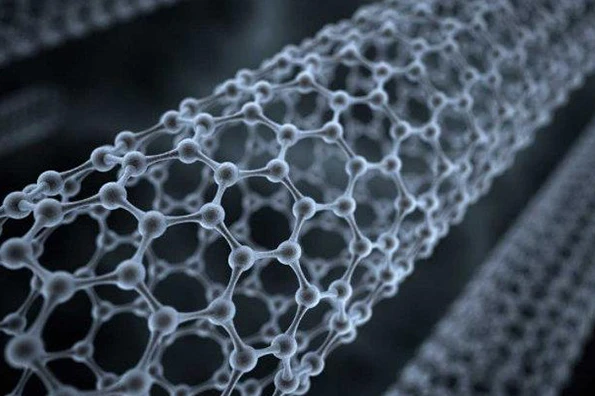
What is carbon fiber toughening?
Carbon fiber toughening refers to the enhancement of the toughness or durability of carbon fiber materials. As we know, carbon fiber is a new type of material that has a very low density but high strength, produced by oxidizing fiber materials at temperatures exceeding a thousand degrees Celsius. Carbon fibers are often in the form of bundles and exhibit excellent performance in terms of tensile strength and elastic modulus. However, the inherent toughness of carbon fiber is not particularly high and it is quite brittle, which imposes certain limitations on its practical use.
Toughening treatment methods are employed to improve the ability of carbon fibers to withstand impacts and resist fractures, allowing them to endure greater dynamic loads or impact forces in applications, thereby expanding the range of applications for this type of material. Carbon fiber toughening is not a simple processing method; it involves multiple technologies, including the use of modified resins as matrices in composites, the introduction of additives, or changes to fiber structures, among others. By toughening carbon fiber, a better balance can be achieved between high strength and high durability, benefiting future fields such as aerospace, automotive manufacturing, medical devices, and sports equipment.
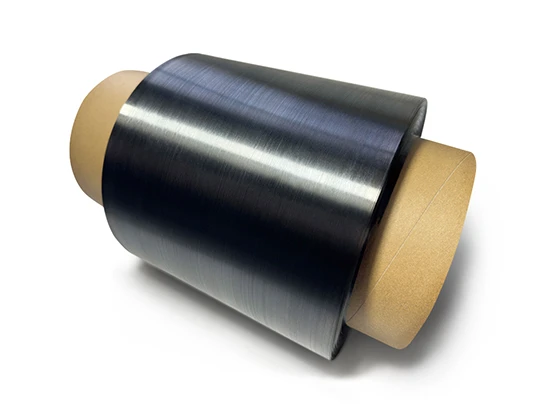
Does toughening treatment help to enhance the performance of thermoplastic carbon fiber?
Carbon fiber technology is continually advancing. Currently, thermosetting carbon fiber is favored by many traditional industries due to its excellent performance. However, thermosetting carbon fiber has significant challenges in recycling, a complex processing procedure, and relatively low performance limits. As a result, thermoplastic carbon fiber is considered an important development direction for the next stage. The preparation of thermoplastic carbon fiber is even more challenging, as thermoplastic resins are quite inert, requiring certain treatments for either the carbon fibers or the resins themselves to facilitate subsequent preparation work. Toughening and other processing methods may reduce the difficulty of preparing thermoplastic carbon fibers. So, does toughening treatment enhance the performance of thermoplastic carbon fibers?
1.Impact Resistance: Toughening treatment helps improve the composite's ability to absorb and withstand impact forces without fracturing, which is especially important in applications where materials may experience sudden loads or impacts.
2.Flexural Strength and Toughness: Toughening treatment can enhance the flexural strength and toughness of thermoplastic carbon fiber composites, allowing them to better resist bending and deformation under load.
3.Fatigue Resistance: Reinforcing the material's fatigue resistance is crucial, particularly in applications where cyclic loads are common. Toughening helps delay the occurrence of fatigue failure.
4.Fracture Toughness: Toughening treatment aids the material in resisting crack propagation, thereby improving its fracture toughness, which is vital for preventing catastrophic failures and enhancing overall structural integrity.
5.Durability: By improving the toughness of thermoplastic carbon fiber composites, their overall durability and wear resistance can be enhanced, thus extending the service life of components.
6.Processability: Some toughening treatments may also affect the processability of thermoplastic composites, making them easier to manufacture and shape into complex forms.
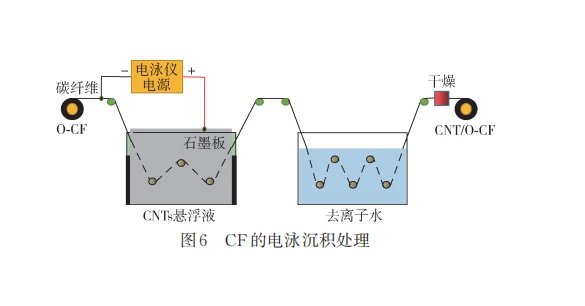
Introduction to Toughening Methods for Thermoplastic Carbon Fiber
Toughening treatments are applicable to both thermosetting and thermoplastic carbon fibers. Research on the latter may break through the current challenges in the preparation of thermoplastic carbon fibers, leading domestic carbon fiber technology more swiftly into the next stage. The toughening treatment of thermoplastic carbon fiber materials is not limited to a single technique; it may include the following methods:
1.Matrix Modification: Altering the composition of the thermoplastic matrix to enhance its toughness, which may involve adding impact modifiers or toughening agents to the polymer.
2.Fiber Structure: Optimizing the arrangement and orientation of carbon fibers within the composite material to improve overall toughness.
3.Additives: Introducing additives into the matrix, such as nanoparticles or microspheres, to enhance impact resistance and toughness.
4.Blending: Combining carbon fibers with other reinforcing materials (e.g., aramid or glass fibers) to create tougher hybrid composites.
5.Interfacial Bonding: Enhancing the bonding effectiveness between carbon fibers and the matrix to improve physical stability and performance limits.