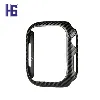
How to distinguish between carbon and carbon fiber?
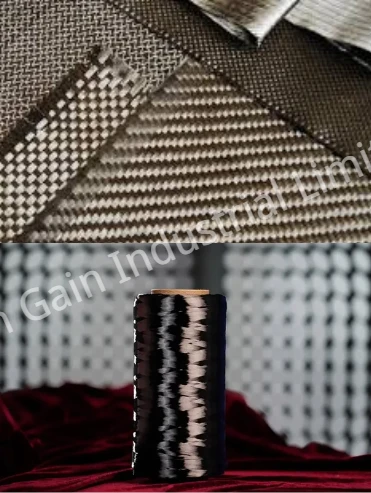
Carbon fiber is a key raw material in thriving economic systems, and at present, many high-end industrial products utilize carbon fiber as a material. Due to its initial application in military, aerospace, and other secretive industries, along with restrictions on exports to our country, carbon fiber remains relatively mysterious for the majority of people, leading to many misunderstandings about its nature. For instance, there are differences and distinctions between carbon, carbon fiber, and carbon-based fibers that are often misunderstood. Below, we provide a detailed introduction to carbon fiber.
Carbon does not refer to a specific material; rather, it is a category of materials primarily composed of carbon elements. Generally, materials with a high carbon content are collectively referred to as carbon-based materials, which include high-purity graphite, carbon, diamonds, and carbon fiber.
Carbon fiber is a textile material produced from high-temperature processing, containing over 95% carbon. It is an aggregate of high-purity graphite in fibrous form. The methods commonly used to produce such materials involve the use of three types of precursors: pitch, rayon, and polyacrylonitrile (PAN). Currently, most filament manufacturers use polyacrylonitrile to produce carbon fiber strands. Carbon fiber has a high tensile strength, is lightweight, and possesses stable properties, making it widely used as a reinforcement material in combination with other materials to exhibit superior characteristics compared to conventional materials.
From the meanings represented by the two terms, we can see that the difference between carbon and carbon fiber lies in the fact that carbon fiber is a subclass of carbon-based materials, while carbon-based materials represent a broader category primarily composed of carbon elements.
Additionally, there is another type of material known as carbon chemical fiber, which specifically refers to carbon fibers produced from polyacrylonitrile. Currently, carbon chemical fiber essentially equates to carbon fiber, with the distinction lying only in the naming and specificity of a certain type of carbon fiber.