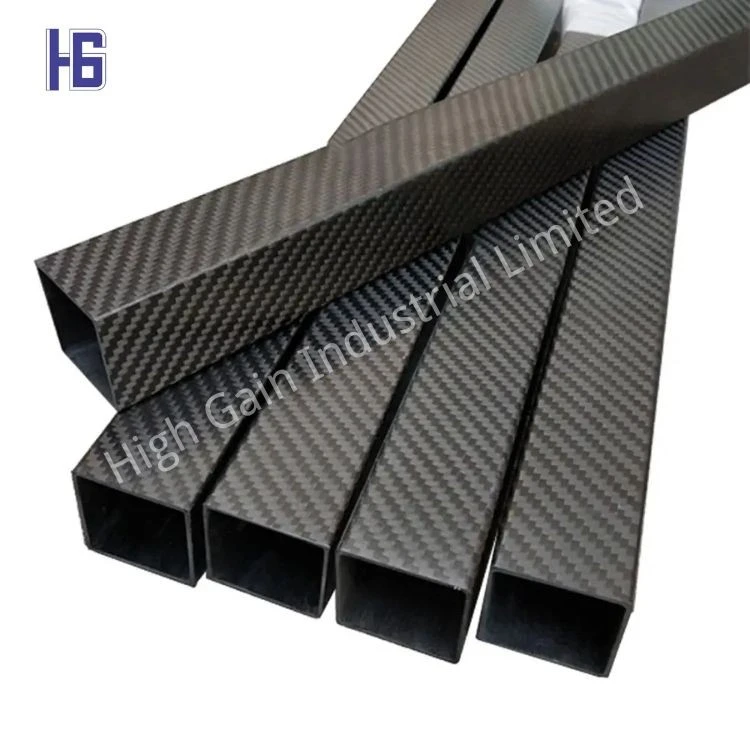
Carbon fiber tubes are divided into square and round profiles. While round tubes have been extensively covered, this article examines common defects in square tubes and effective quality improvement methods.
Production Focus: Precision and Surface Integrity
Dimensional accuracy and surface quality are critical in manufacturing. Strict adherence to client specifications, precise mold design (with calculated post-molding tolerances), and high-quality prepreg materials typically ensure structural performance. However, surface defects often persist:
Surface Cracking
Cause: Insufficient compaction during layup or improper temperature control.
Solution: Optimize layup pressure and maintain precise curing temperatures to minimize delamination risks.
Surface Wrinkling
Cause: Contact between auxiliary materials (e.g., vacuum bags, breather fabrics) and the tube under high-pressure curing.
Solution: Adjust placement of auxiliary materials to avoid direct surface contact during molding.
Surface Bubbles
Cause: Air entrapment during layup or low-quality prepreg.
Solution: Implement rigorous degassing protocols and source certified prepreg materials.
Refining Mature Processes for Higher Standards
While carbon fiber square tube production is well-established, attention to these细节 is vital for advancing quality. Key steps include:
Material Handling: Ensure prepreg storage conditions (temperature/humidity) align with manufacturer guidelines.
Process Calibration: Regularly validate mold alignment and curing cycle parameters.
Post-Processing: Use non-destructive testing (e.g., ultrasonic inspection) to detect subsurface flaws.
By addressing these factors, manufacturers can produce defect-resistant square tubes tailored to aerospace, robotics, and high-performance automotive applications.