Preparation and Classification of High-performance Carbon Fibers
Carbon fibers are widely used in aerospace, automotive, and other high-performance applications due to their outstanding strength-to-weight ratio and high stiffness. The preparation and classification of these fibers involve several complex processes that require specialized equipment and expertise.
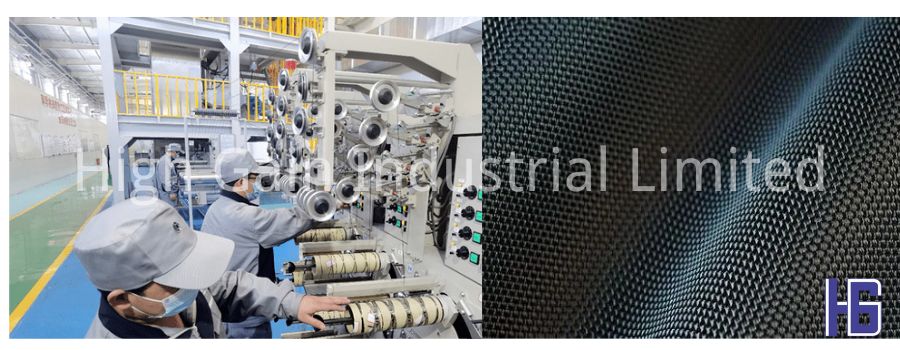
Preparation of Carbon Fibers:
Carbon fibers are typically prepared from precursor materials, such as polyacrylonitrile (PAN), pitch, or rayon. The precursor materials are converted into fibers through a process called pyrolysis, which involves heating the material to high temperatures in the absence of oxygen.
PAN-based Carbon Fibers:
PAN-based carbon fibers are the most widely used type of carbon fibers due to their superior properties. The production process of PAN-based carbon fibers involves several stages, including oxidation, stabilization, and carbonization.
The first stage, oxidation, involves heating the PAN fibers in air to improve their thermal stability and remove any impurities. This process creates a material called oxidized PAN (OPAN), which is then further processed to produce stabilized PAN (SPAN).
In the second stage, stabilization, the SPAN fibers are heated to around 250°C in an inert atmosphere to cause chemical crosslinking and stabilize the fibers. The resulting material is known as carbon fiber precursor.
Finally, in the third stage, carbonization, the precursor fibers are heated to high temperatures (>1000°C) in the absence of oxygen to convert them into carbon fibers.
Pitch-based Carbon Fibers:
Pitch-based carbon fibers are prepared by heating petroleum or coal tar pitch to high temperatures in the absence of air. The resulting material is then extruded into fibers and carbonized. These fibers have excellent mechanical properties but are more expensive to produce compared to PAN-based carbon fibers.
Classification of Carbon Fibers:
Carbon fibers are classified based on their tensile strength and modulus. The tensile strength is the maximum stress a material can withstand before breaking, while the modulus refers to the material's stiffness.
The classification system used for carbon fibers is based on the tensile modulus and was established by the International Organization for Standardization (ISO). The ISO standard classifies carbon fibers into different grades, each with specific tensile modulus ranges.
The most common grades of carbon fibers are:
- Standard modulus (SM): Tensile modulus of 34-38 MSI.
- Intermediate modulus (IM): Tensile modulus of 38-42 MSI.
- High modulus (HM): Tensile modulus of 42-75 MSI.
- Ultra-high modulus (UHM): Tensile modulus of 75-145 MSI.
Conclusion:
The preparation and classification of high-performance carbon fibers require specialized knowledge and equipment. PAN-based carbon fibers are the most widely used type due to their superior properties and cost-effectiveness. Carbon fibers are classified based on their tensile strength and modulus, with several grades available to suit specific applications. The ongoing research and development in carbon fiber technology are expected to lead to further improvements in their properties and lower cost, making them increasingly popular in various industries.