Production, Processing, Manufacturing and Difficulties of Producing Carbon Fiber Rollers
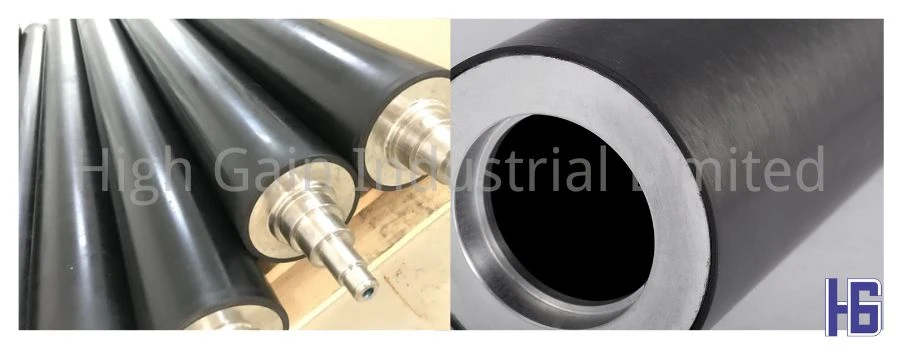
Carbon fiber rollers are widely used in various industries, such as textile manufacturing, paper manufacturing, plastic processing, and more. These rollers are known for their excellent strength, rigidity, and lightweight properties. However, the production, processing, and manufacturing of carbon fiber rollers entail several difficulties that manufacturers often face. In this article, we will discuss the production, processing, manufacturing, and process difficulties of carbon fiber rollers.
Production of Carbon Fiber Rollers
The production of carbon fiber rollers begins with the preparation of carbon fibers. Carbon fibers are usually derived from either a polyacrylonitrile (PAN) precursor or a petroleum-based precursor known as pitch. The fibers undergo a series of preprocessing steps to remove impurities and improve their strength. The fibers are then treated with a sizing material to enhance their bonding with resin. The fibers are wound on a mandrel or core to produce a preform. The preform is then cured in an autoclave or an oven to form a solid carbon fiber composite.
Processing of Carbon Fiber Rollers
After the preform is cured, the carbon fiber roller undergoes several processing steps. The roller may require machining, grinding, or polishing to achieve precise dimensions. The roller must be inspected for any defects or imperfections that may affect its performance. The roller may also require surface treatment to improve its adhesion with other materials. Finally, the roller is coated with a protective layer to prevent wear and tear.
Manufacturing of Carbon Fiber Rollers
The manufacturing of carbon fiber rollers involves several challenges. The high cost of carbon fibers and the complex production process make carbon fiber rollers expensive to manufacture. The manufacturing process requires specialized equipment such as mandrels, autoclaves, and ovens. The production process may also require skilled labor to ensure the quality of the finished product.
Process Difficulties of Carbon Fiber Rollers
Carbon fiber rollers are subject to several process difficulties during production, processing, and manufacturing. One of the significant challenges faced by manufacturers is the delamination of the carbon fiber composite due to improper curing. Delamination can weaken the roller's structure and cause it to fail under load. Another issue is that carbon fiber rollers are susceptible to extreme temperature changes, which can cause the composite to expand or contract, affecting its dimensions. Furthermore, carbon fiber rollers require specialized machining and polishing techniques due to their hardness and abrasiveness.
Conclusion
Carbon fiber rollers are critical components in various industries. The production, processing, and manufacturing of carbon fiber rollers require careful attention to detail to ensure the quality of the final product. The high cost of carbon fibers and the complex manufacturing process make these rollers challenging to produce. The process difficulties of carbon fiber rollers include delamination, thermal expansion, and complex machining and polishing requirements. Despite the challenges, carbon fiber rollers remain a valuable solution for many industries due to their superior mechanical properties.