Resin Transfer Molding RTM
a closed die low pressure forming method
composite products that are pre placed in the mold cavity, injected with polymer after mold closing, and then solidified
Fiber reinforced materials can sometimes be preformed in one mold (with binder) and then injected into a second mold.
Advantages of resin transfer molding:
1) The fiber content of the product can be high, and the part not soaked by resin is very few;
2) Good molding environment, good production environment;
3) The labor intensity is low, and the technical proficiency of workers is lower than that of hand paste and spray molding;
4) The product is glossy on both sides and can be used as the product with surface gel coat, and the precision is relatively high;
5) The molding cycle is short;
6) Products can be large-scale;
7) The strength can be directional according to the design requirements;
8) It can be integrated with core and insert;
9) Compared with injection equipment and mold, the cost is lower.
Disadvantages of resin transfer molding:
1) It is not easy to make small products;
2) Due to pressure, the mold is heavier and more complex than hand paste and spray process, and the price is higher.
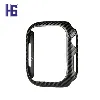
Typical products: small aircraft and auto parts, bus seats, instrument case.