The advantages of carbon fiber applications in cars
Carbon fiber, as a new type of structural material, can be described as a revolution in the field of materials. Carbon fiber materials possess excellent properties such as high temperature resistance, fatigue resistance, high strength, lightweight, and good processability, gradually conquering traditional materials. In this article, let us explore the advantages of carbon fiber applications in cars.
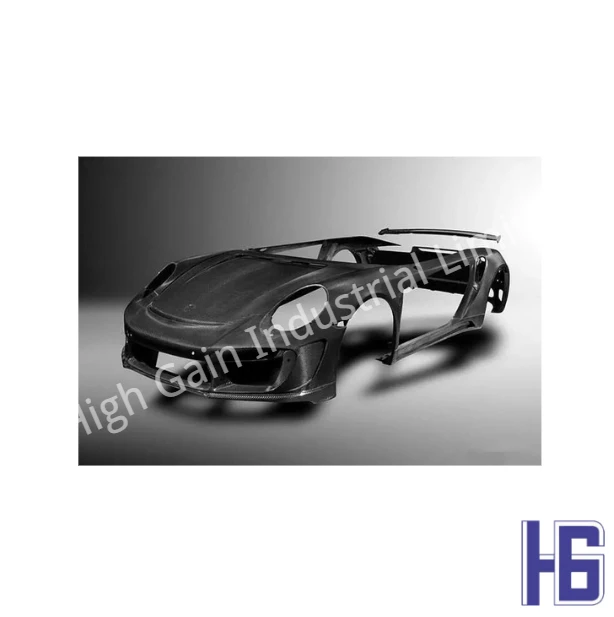
The density of typical carbon fiber materials is 1.7g/cm3. This low density allows carbon fiber to achieve weight reduction in large aircraft, such as the Airbus A350 and A380, as well as the Boeing 787. Therefore, the performance advantages of carbon fiber are also utilized in automotive components.
In the field of Formula 1 racing, the use of full-carbon fiber is no longer a new technology. The intense competition where every second counts and increasingly stringent competition standards have led to the growing application of carbon fiber technology.
Some may raise concerns about whether carbon fiber, with its characteristics of being super lightweight, flexible, and tensile-resistant, lacks strength. Carbon fiber is a new material with excellent mechanical properties. Its density is less than a quarter of steel, with a tensile strength generally exceeding 3000MPa, several times that of steel. Additionally, its bending strength and shear strength are much superior to traditional structural materials, meeting the required strength for use. Furthermore, the design strength of carbon fiber materials allows performance advantages to be fully realized through rational design.