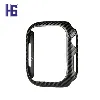
The differences between thermoplastic and thermosetting carbon fiber composite manufacturing.
Unlike thermosetting carbon fiber composites, thermoplastic carbon fiber composites exhibit certain differences in resin matrix, processing methods, and performance.
Firstly, thermosetting carbon fiber composites predominantly use epoxy resins and similar materials as the resin matrix, while thermoplastic carbon fiber composites include polyamide (PA), polyether ether ketone (PEEK), PPS, polyimide (PI), and polyether imide (PAI). Thermoplastic resins are not subject to shelf life limitations, do not require low-temperature storage, and offer good recyclability, recoverability, and reusability.

Secondly, the molding process of thermoplastic resins is primarily a simple melting and solidification process. This involves heating the material to a certain melting point and then allowing it to solidify upon cooling, resulting in basic shaping. If needed, the material can be reheated for secondary shaping, which contrasts with thermosetting carbon fiber composites that can only be shaped once.
Furthermore, during the production of thermosetting carbon fiber composites, a chemical reaction occurs, leading to production cycles that can last several hours. In contrast, the manufacturing process of thermoplastic carbon fiber composites is a phase transition process, requiring only a few minutes to tens of minutes for production. This significantly shorter production cycle greatly enhances production efficiency, enabling not only batch production but also the potential for automated continuous production.
However, the manufacturing of thermoplastic carbon fiber composite products demands higher processing requirements. For instance, a processing temperature of at least 400°C is generally needed, whereas standard epoxy carbon fiber composites can be processed at temperatures above 200°C.