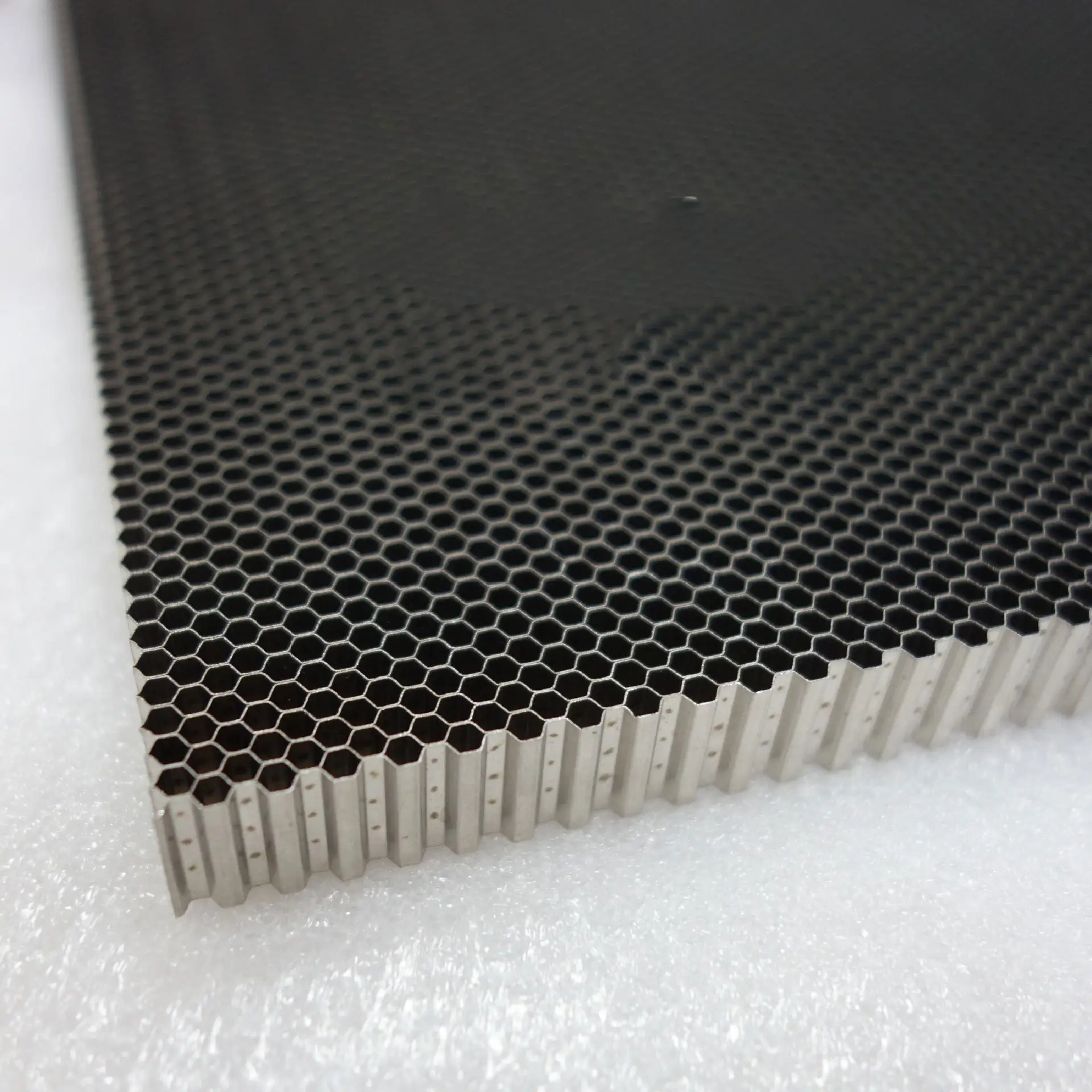
Aluminum honeycomb panels have long been valued in industries like construction and aerospace for their unique blend of strength and lightness. By integrating carbon fiber into these panels, engineers have created a material that pushes the boundaries of structural efficiency. Here's how these advanced composites are made and why they outperform conventional alternatives.
Crafting the Hybrid Structure
The production of carbon fiber aluminum honeycomb panels builds on traditional composite manufacturing with precision layering:
Mold Design: Custom molds are shaped to the panel's target dimensions, ensuring dimensional accuracy.
Base Layer Formation: Carbon fiber prepreg sheets are laid to form the bottom skin, cut to match the honeycomb core's footprint.
Frame Assembly: Vertical carbon fiber strips are positioned around the perimeter, creating a reinforced border.
Core Placement: Precision-cut aluminum honeycomb cores-typically 5-20 mm thick-are nested within the carbon fiber frame.
Top Layer Integration: A final carbon fiber layer encapsulates the core, completing the sandwich structure.
Curing Cycle: The assembly undergoes vacuum bagging and autoclave curing at 120-180°C, bonding the layers under controlled pressure.
Finishing Touches: Automated CNC machines trim edges and drill mounting points for end-use compatibility.
This method merges carbon fiber's directional strength with the honeycomb's geometric stability, resulting in panels that excel where weight and rigidity are critical.

Why This Combination Works
Weight Savings Without Sacrifice
At 0.45-0.6 g/cm³, these panels weigh 70% less than solid aluminum yet match its stiffness. A 1 m² panel can support over 500 kg while weighing just 2.8 kg-a game-changer for aircraft interiors or mobile medical units.
Thermal and Acoustic Mastery
The honeycomb's air-trapping design achieves thermal conductivity as low as 0.5 W/m·K, outperforming fiberglass insulation. Simultaneously, sound waves lose 85% of their energy passing through the core, making these panels ideal for concert halls or machinery enclosures.
Adaptable Strength
By adjusting carbon fiber layup angles (0°/90° for rigidity, ±45° for impact resistance), manufacturers tailor panels for specific loads. In wind turbine blade interiors, such customization reduces material use by 40% while maintaining fatigue resistance.
Real-World Impact
Consider high-speed trains: Replacing steel floor panels with carbon fiber aluminum honeycomb versions cuts weight by 35%, lowering energy consumption by 15%. Similarly, in satellite antenna reflectors, the material's near-zero thermal expansion ensures signal accuracy across orbital temperature swings (-170°C to +120°C).
From stadium roofs to drone airframes, this hybrid material proves that smart engineering can defy traditional trade-offs between weight, strength, and functionality. As industries prioritize sustainability and efficiency, carbon fiber aluminum honeycomb panels stand as a testament to innovation in composite technology.