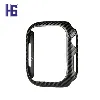
The five directions of carbon fiber modified thermoplastic resin composites.
Carbon fiber is a rare high-performance material, and research on it began over a century ago. Today, the technology and industry development of carbon fiber have received support from many countries around the world. Carbon fiber itself is soft and difficult to shape; therefore, modifying it and compounding it with substrates such as plastics, resins, metals, and ceramics can yield superior overall performance and stable structures that meet industrial application requirements.
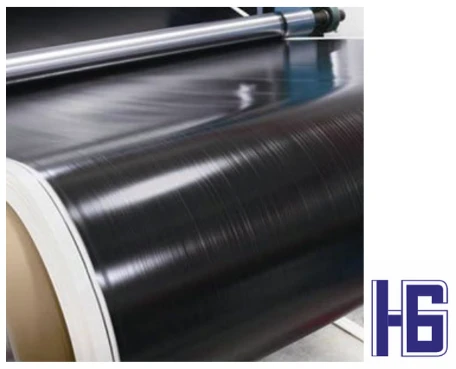
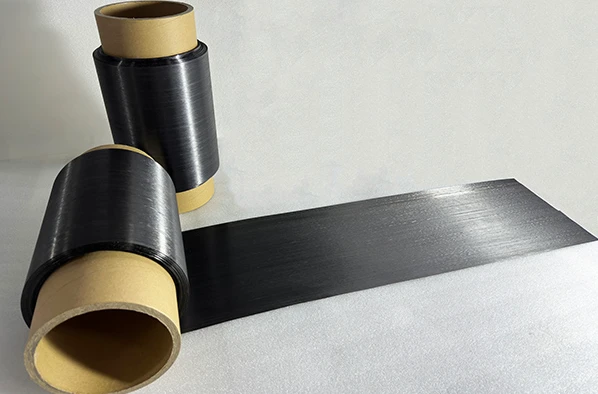
Carbon fiber modified resins are a relatively successful type of composite material, with thermosetting carbon fiber composites being the mainstream choice today. The resins used include epoxy resins and phenolic resins, among others. The integration of thermoplastic resins with carbon fiber is challenging; however, the overall performance is better, making it an important direction for the future development of the carbon fiber industry. Under the current level of industrial technology, significant progress has been made in the research of carbon fiber modified thermoplastic resin composites. Numerous high-performance continuous carbon fiber reinforced thermoplastic composites have already been successfully developed, such as CF/PPS and CF/PEEK unidirectional tapes produced by Zhishang New Materials.

1.Carbon Fiber Modified Polypropylene Resin Composites
Polypropylene (PP) is the most widely used polymer material in fields such as automotive and home appliances, with annual production in China exceeding 1 million tons. Modifying polypropylene resin with carbon fiber can significantly improve the strength and rigidity of the composite material. In addition, the incorporation of carbon fiber also has a considerable impact on the flowability and crystallinity of PP materials.
Carbon fiber modified PP materials are typically processed using melt blending techniques, which mainly include two processing methods: twin-screw extrusion and long-fiber reinforcement. The properties of the modified materials are influenced by factors such as the amount of carbon fiber added, fiber length, compatibilizers, and surface treatment of the fibers.
Currently, long-fiber reinforced PP composites have been widely applied in sectors such as automotive and marine industries. However, due to the poor compatibility between the PP matrix and carbon fiber, achieving high mechanical performance in the composites requires complex surface treatment processes for the carbon fiber, which significantly increases both processing costs and difficulty.
2.Carbon Fiber Modified Polyvinyl Chloride Resin Composites
Polyvinyl chloride (PVC) is one of the most widely produced general-purpose resins in China, with key advantages including low cost, good electrical insulation properties, excellent chemical resistance, and simple molding processes. However, some inherent drawbacks such as poor toughness, low impact strength and thermal stability, and poor processing performance limit its application in fields with stringent requirements.
Carbon fiber modified PVC materials can effectively enhance the tensile strength, surface hardness, and flexural strength of the PVC matrix, making them suitable for the production of various PVC sheets and pipes.
The compatibility between carbon fiber filaments and the PVC matrix is better, resulting in significantly improved tensile strength, flexural strength, and impact strength compared to the PVC matrix. Due to the poor thermal stability of the PVC matrix, processing methods such as melt immersion or blending can easily lead to degradation of the matrix. Therefore, carbon fiber modified PVC materials are typically processed using lamination techniques.
3.Carbon Fiber Modified Polycarbonate Resin Composites
Polycarbonate (PC) is a widely used engineering plastic known for its high impact strength and good transparency. When carbon fiber is compounded with PC, it can further enhance the various properties of PC and expand its application fields.
Research has shown that when the amount of carbon fiber added is below 20%, there is a significant enhancement in the tensile strength, flexural strength, and flexural modulus of the material. The impact strength reaches its maximum when the carbon fiber content is around 6%. When the carbon fiber content is between 10% and 20%, the surface resistivity of the material can reach 8×10^9 Ω·cm, providing excellent antistatic properties.
The composite of polycarbonate (PC) with carbon fiber can also impart electromagnetic shielding properties to the polymer matrix; however, the shielding efficiency is not very high. To achieve the required shielding effectiveness of standard electromagnetic shielding materials, it is necessary to add other high-conductivity metal fibers or powders. Carbon fiber or metal-coated carbon fiber, when compounded with metal powders, graphene, conductive carbon black, etc., can play a bridging role in the composite material, thereby enhancing the electromagnetic shielding performance.
4.Carbon Fiber Modified Polyamide Resin Composites
Polyamide (PA) is an excellent engineering plastic, but due to its high crystallinity and significant moisture absorption, the dimensional stability of products made from this material is poor, and its strength and hardness do not match those of metals. In practical applications, these materials often require reinforcement with glass fiber or carbon fiber.
After being reinforced and modified with carbon fiber, the mechanical properties of PA can be greatly enhanced. The modified material can serve both as a structural material to bear loads and as a functional material. Currently, most research on carbon fiber modified PA focuses on the effects of surface modification of carbon fibers on the interface and performance of the composites.
Studies have shown that oxidation treatment of the carbon fiber surface improves the bonding strength between carbon fiber and PA1010. As the volume fraction of carbon fiber increases, the tensile strength and Rockwell hardness of the composite initially increase and then decrease. When the volume fraction of carbon fiber reaches 20%, the tensile strength of the material reaches its maximum value. Additionally, the friction coefficient of the material decreases with increasing volume fraction of carbon fiber, stabilizing at around 0.24 when the volume fraction of carbon fiber reaches 20%.
5.Carbon Fiber Modified Special Engineering Plastic Composites
Special engineering plastics refer to those with higher overall performance and long-term service temperatures above 150°C. These materials mainly include PEEK, PPS, TPI, and others. Most special engineering plastics can serve as matrix materials for thermoplastic composites reinforced with glass fiber, carbon fiber, and aramid fiber. Carbon fiber reinforced special engineering plastics possess excellent mechanical properties and processing performance, allowing them to completely replace thermo-setting resins or even metals in applications such as aerospace, marine, and medical fields.
A. Carbon Fiber Reinforced Polyether Ether Ketone (PEEK) is currently the highest temperature resistant thermoplastic, with a long-term use temperature of up to 250°C. Even at temperatures as high as 300°C, it maintains very good mechanical properties. Carbon fiber modified PEEK not only enhances the strength and rigidity of the material but also imparts conductivity and wear resistance characteristics.
B. Thermoplastic Polyimide (TPI) exhibits outstanding thermal stability, along with excellent impact resistance, radiation resistance, and solvent resistance. Moreover, this type of material demonstrates exceptional wear resistance in extreme environments characterized by high temperatures, varying pressures, and high speeds. The application of carbon fiber reinforcement can further enhance the performance of these materials and expand their application range.
C. Polyphenylene Sulfide (PPS) is a semi-crystalline thermoplastic resin known for its excellent mechanical properties, chemical resistance, and self-extinguishing characteristics. Additionally, this type of material shows good compatibility with inorganic minerals and organic fibers, making it suitable for the preparation of various composites with high filler content. Thermoplastic carbon fiber PPS composites exhibit good mechanical properties and excellent solvent resistance. The bonding performance between PPS and carbon fiber is also excellent; however, all mechanical properties are significantly influenced by the volume fraction of carbon fiber fabric. When the volume fraction of carbon fiber fabric is below 50%, all mechanical properties of the composite improve substantially with an increase in the volume fraction of carbon fiber fabric.
Different types of thermoplastic resins exhibit varying degrees of performance when integrated with carbon fiber, and there are also differences in preparation and subsequent processing. Only through continuous experimentation can the optimal solutions be found, propelling the entire carbon fiber industry into the next stage. Currently, several thermoplastic carbon fiber composites, such as CF/PPS and CF/PEEK, have been demonstrated to perform well in terms of performance, production, and recycling, making them important areas for in-depth research and development in the short term. In recent years, Zhi Shang New Materials has been working to better integrate continuous carbon fibers with these thermoplastic resins to create unidirectional tapes with more stable physical forms and superior mechanical properties. With advancements in technology and equipment adjustments, the capability for mass production of such products has been established.