Carbon fiber, as a high-performance composite material, is increasingly vital in industrial equipment, driving industrial advancements. This article explores its current applications from a market demand perspective.
Production Process and Performance
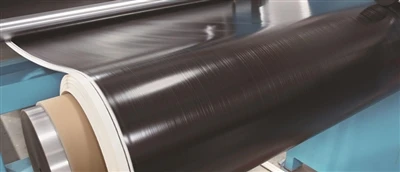
Carbon fiber production begins with raw materials such as polyacrylonitrile (PAN) or pitch, processed through stretching, oxidation, carbonization, and high-temperature treatment (exceeding 1000°C). Precise control of raw materials, process parameters, and equipment determines key properties like tensile strength, elastic modulus, and elongation. High-quality carbon fibers exhibit exceptional strength-to-weight ratios, high modulus, low density, and surface reactivity-critical for effective bonding with matrix materials.
Domestic Industry Breakthroughs
China's carbon fiber sector has rapidly advanced, achieving cost competitiveness and world-class performance. This progress has broken international monopolies, accelerating domestic adoption in industrial equipment.
Market Drivers: Lightweighting and Durability
Demand for carbon fiber components stems from industrial needs for lightweight, high-strength, and durable solutions. As industries shift toward intelligence and sustainability, traditional metals face limitations in weight and performance, positioning carbon fiber as an ideal alternative.
Applications Across Industries
Aerospace: Used in fuselage structures, wing boxes, and control surfaces, reducing weight while enhancing strength and fatigue resistance.
Automotive: Applied to body panels, chassis components, and interiors, lowering vehicle mass and boosting energy efficiency.
Heavy Machinery: Integrated into cranes and excavators to extend service life and reduce energy consumption.

Challenges in Manufacturing
Reliable carbon fiber component production hinges on advanced technologies and equipment. Key barriers include:
High Initial Costs: Substantial capital for equipment procurement and R&D.
Long Production Cycles: Time-consuming processes such as high-temperature heat treatment.
Complex Processing: Specialized tools and expertise required, raising costs and barriers for SMEs.
Quality Control: New entrants often struggle with consistency and yield rates, underscoring the importance of partnering with experienced manufacturers.
Future Outlook
Advancements in technology and scaled-up production will expand carbon fiber's role in industrial equipment:
Cost Reduction: Improved materials and processes will lower expenses and shorten lead times.
Digitalization: Smart inspection systems and digital manufacturing will enhance quality and efficiency.
Thermoplastic Composites: Emerging recyclable variants will unlock high-performance applications while aligning with circular economy goals.
Carbon fiber's journey from niche material to industrial cornerstone reflects its unmatched potential to redefine modern engineering-balancing strength, sustainability, and innovation.