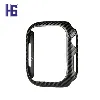
When encountering carbon fiber products, most people are drawn to their distinctive woven appearance-a novel aesthetic that has sparked demand for unique patterns. This trend has even led to carbon fiber-look stickers, though these imitations share nothing with genuine carbon fiber. Today, we explore how different weave patterns impact carbon fiber products.

Carbon fiber is rarely used alone; it's typically combined with resin to form composites where the fibers bear structural loads. External forces transfer through the resin matrix to the fibers, and failure occurs primarily in two ways: tensile stress parallel to the fibers or shear stress perpendicular to them. This means carbon fiber requires exceptional tensile strength and shear resistance to prevent damage.
Understanding this principle is crucial for product design. By analyzing stress distribution and optimizing fiber orientation, manufacturers can maximize performance-making knowledge of weave patterns essential for effective engineering.
The most common patterns are plain weave and twill weave. Plain weave features the highest number of fiber intersections, creating rigid, flat fabrics with greater elongation under tension. Twill weave displays diagonal lines angled to the fiber direction, offering exceptional tear resistance. Since carbon fiber fabric forms the foundation of composites, aligning fiber bundles with anticipated stresses is key to performance.
High Gain Industrial Co., Ltd. stands as a well-established carbon fiber manufacturer. We engineer products to meet precise performance requirements, maximizing material advantages through intelligent design. All items utilize premium raw materials from internationally recognized brands in Taiwan, Japan, and beyond. Quality guaranteed.