Unidirectional carbon fiber prepreg serves as a primary intermediate material for manufacturing composite structural components. Compared to woven carbon fiber prepreg, it retains all the advantages of prepreg materials-like ease of use and controllable fiber/resin ratios-while allowing structural optimization tailored to specific load-bearing requirements.
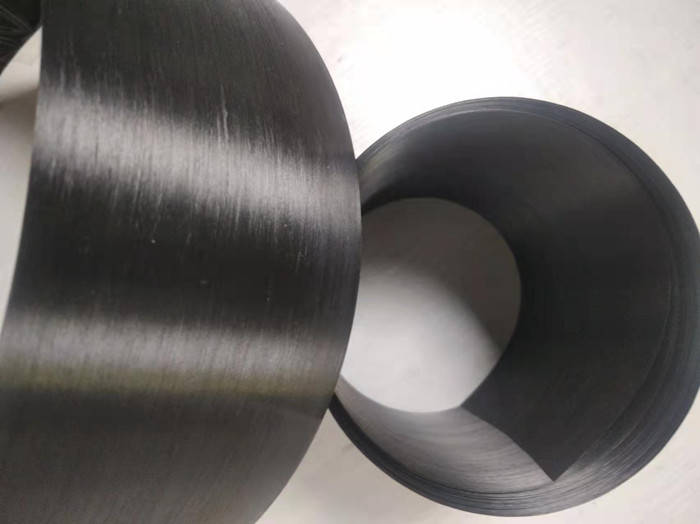
For structural designers, unidirectional prepreg acts like building bricks: it's the fundamental unit for structural design and strength calculations. This demands consistent post-curing dimensions and mechanical properties. For manufacturing engineers, it must also offer excellent processability to meet layup and molding needs.
The application of unidirectional carbon fiber prepreg has expanded rapidly, with specialized factories now offering a wide range of standardized products. Production methods fall into two main categories: wet and dry processes. The wet method involves impregnating fibers with a resin-curing solution, then drying to remove solvents, resulting in a tacky material. Techniques vary by equipment and include hand layup, filament winding, and spray application. Dry methods, solvent-free alternatives, include hot-melt and film-adhesive processes. Dry production offers advantages like precise resin control and higher efficiency but requires larger production volumes. In contrast, wet filament winding accommodates smaller batches and diverse product development.
Prepreg must exhibit uniform, smooth surfaces free of gaps or fiber overlaps. During production, any fiber agglomerations must be promptly removed to prevent surface irregularities or cracks. Release liner paper quality is critical-dimensional instability can cause rippling, wrinkles, or uneven surfaces, complicating processing and compromising aesthetics. Issues like improper release agent selection, inadequate curing, uncontrolled application, or uneven coating can all lead to these defects.