Basic composition and characteristics
Thermoplastic carbon fiber composites are new composite materials composed of carbon fiber reinforcement and thermoplastic resin matrix. Carbon fiber as a reinforcement has the characteristics of high strength, high modulus and low density, providing excellent mechanical properties for composite materials. Commonly used thermoplastic resin matrices include polyetheretherketone (PEEK), polyphenylene sulfide (PPS) and polyamide (PA), etc. These resins give the composite materials good plasticity and recyclability.
The basic properties of thermoplastic carbon fiber composites include high strength, high stiffness, low density, corrosion resistance and designability. Compared with thermosetting composites, thermoplastic composites have better impact resistance, shorter molding cycle and weldability. In addition, thermoplastic composites show better toughness and damage tolerance at high temperatures, which gives them significant advantages in high temperature environment applications.
Mechanical properties
Thermoplastic carbon fiber composites show excellent mechanical property retention under high temperature conditions. Studies have shown that such materials can still maintain high strength and modulus even under high temperature conditions above 200°C. For example, the strength retention rate of PEEK-based carbon fiber composites at 200°C can reach more than 80%, which is much higher than that of traditional thermosetting composites.

The effect of high temperature on the mechanical properties of thermoplastic carbon fiber composites is mainly reflected in the softening degree of the resin matrix and the interface bonding strength. As the temperature increases, the modulus of the resin matrix decreases, resulting in a decrease in the overall stiffness of the composite. However, due to the high temperature stability of the carbon fiber reinforcement, the strength decrease of the composite is relatively small. In addition, the reasonable selection of the resin matrix and the optimization of the interface bonding can effectively improve the high temperature mechanical properties of the composite.
Thermal stability and creep resistance
Thermoplastic carbon fiber composites exhibit excellent thermal stability and creep resistance at high temperatures. Thermal stability is mainly reflected in the dimensional stability and chemical stability of the material under high temperature environment. For example, PEEK-based carbon fiber composites can be used for a long time at 250°C, and the short-term use temperature can reach above 300°C, and maintain good dimensional stability and chemical inertness within this temperature range.
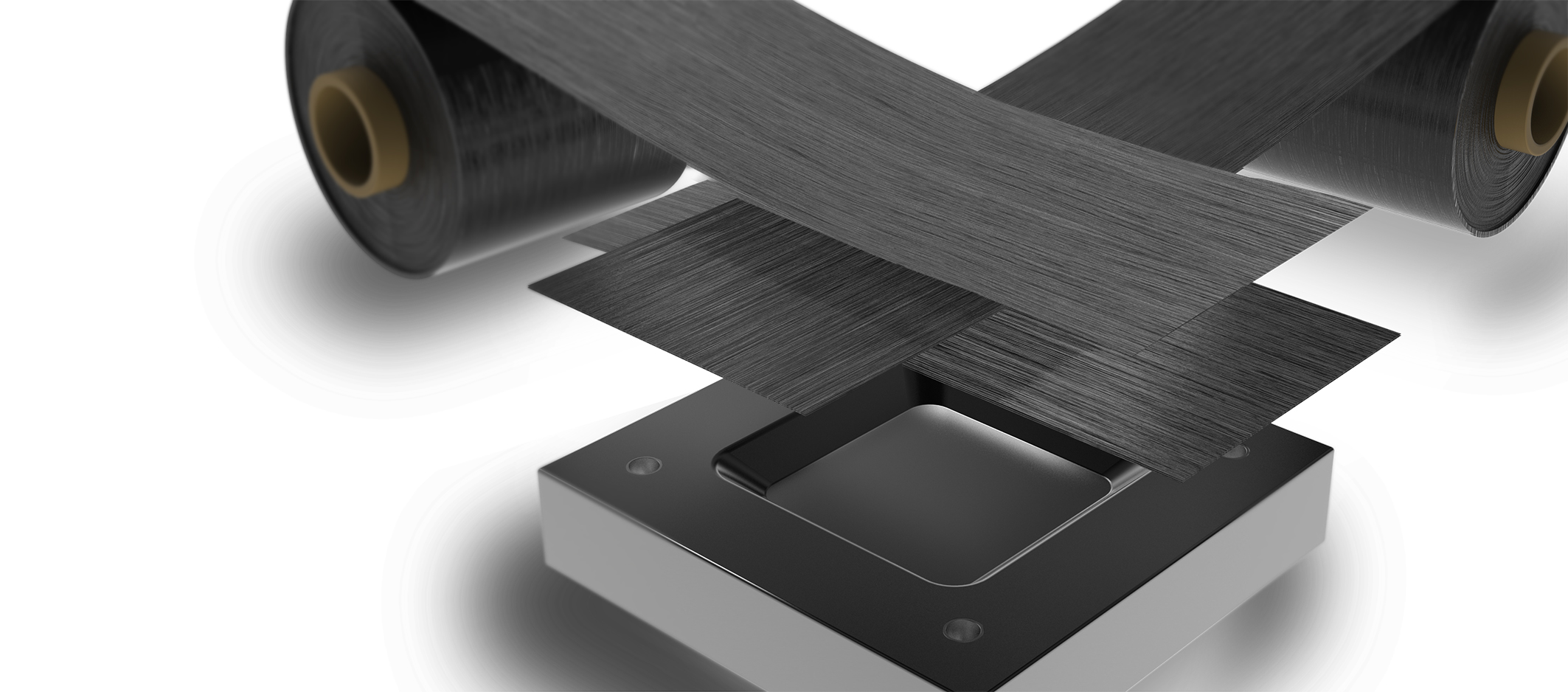
Creep resistance is an important indicator to measure the ability of a material to resist deformation under high temperature and continuous load. Due to the presence of carbon fiber reinforcement, thermoplastic carbon fiber composites exhibit excellent creep resistance at high temperatures. Studies have shown that at 200°C and constant load, the creep strain of PEEK-based carbon fiber composites is significantly lower than that of traditional metal materials, and the creep rate gradually decreases with time. This excellent creep resistance makes thermoplastic carbon fiber composites have broad application prospects in high-temperature load-bearing structures.
Features
In addition to excellent mechanical properties and thermal stability, thermoplastic carbon fiber composites also exhibit unique functional properties at high temperatures. The first is electrical conductivity. Carbon fiber itself has good electrical conductivity, which enables the composite material to maintain stable electrical conductivity at high temperatures. This feature allows thermoplastic carbon fiber composites to be used for static dissipation and electromagnetic shielding in high temperature environments.

The second is thermal conductivity. Although the thermal conductivity of the resin matrix is poor, the high thermal conductivity of carbon fiber makes the composite material as a whole have good thermal conductivity. In a high temperature environment, this thermal conductivity helps the rapid diffusion of heat, prevents local overheating, and improves the safety of the material.

The last is electromagnetic shielding performance. The conductive network structure of carbon fiber enables thermoplastic carbon fiber composites to maintain good electromagnetic shielding effects at high temperatures. Studies have shown that even at a high temperature of 200°C, PEEK-based carbon fiber composites can still maintain an electromagnetic shielding effectiveness of more than 60dB, which is much higher than traditional metal materials