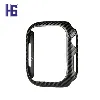
Carbon fiber shaped parts are becoming more and more popular in industries like automotive and aerospace. Their high strength-to-weight ratio makes them a top choice for replacing heavier materials like metals. Custom carbon fiber components provide an efficient and cost-effective solution for fulfilling unique structural and functional requirements.

The custom manufacturing process begins with the creation of a digital 3D model for the desired part. This model is then used to craft a mold which forms the foundation for producing the carbon fiber part. The mold-making process is crucial, as it dictates the final shape and surface finish of the part. The most commonly used mold-making methods include CNC machining and 3D printing. CNC machining is favored for its high precision and ability to produce molds with tight tolerances. It's particularly suitable for low-volume production or when the mold needs to be reused for multiple parts. On the other hand, 3D printing offers a more flexible and cost-effective approach, especially for one-off or highly complex designs. It allows for rapid iteration of mold designs and reduces the lead time significantly.
Once the mold is ready, the carbon fiber material is prepared. This often involves cutting the carbon fiber sheets or tapes into the required shapes and sizes. The carbon fiber is then laid up in the mold, carefully positioned to ensure proper orientation and alignment. A resin, typically an epoxy, is applied to the carbon fiber to act as a binder. The resin not only holds the fibers together but also provides additional strength and resistance to the final part. The part is then cured under specific temperature and pressure conditions to allow the resin to harden and the carbon fibers to set in their desired positions. The curing process is critical as it determines the final mechanical properties of the part.
The cost of custom carbon fiber shaped parts can vary based on several factors. The complexity of the design plays a significant role. More intricate designs may require more precise mold-making and more labor-intensive lay-up processes, which can increase costs. The material selection also affects the price. Different types of carbon fiber and resins have varying price points based on their quality and performance characteristics. Higher-grade materials may offer better mechanical properties but come at a higher cost. Production volume is another key factor. Producing larger quantities can lead to economies of scale, reducing the per-unit cost. However, for smaller production runs or one-off custom parts, the cost per unit may be higher due to the fixed costs associated with mold-making and setup.
In terms of its advantages, carbon fiber offers exceptional strength and stiffness, making it ideal for applications where weight reduction is crucial. Its fatigue resistance ensures that the parts can withstand repeated stress and strain without significant degradation in performance. Additionally, carbon fiber parts are highly resistant to corrosion, which extends their service life compared to traditional materials like steel or aluminum. They also exhibit excellent dimensional stability, maintaining their shape and dimensions even under varying environmental conditions.
To summarize, custom carbon fiber shaped parts offer a versatile and high-performance solution for various industrial applications. By understanding the basics of their production process and considering the factors that influence cost and performance, businesses can make informed decisions when incorporating these advanced materials into their products.