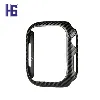
Why has carbon fiber composite material become a leader among new materials?
Materials are the ladder for the advancement of human material civilization, and the development of new materials has become a transformative extension of technology. The compounding of materials has also become an important trend in development. Among these, carbon fiber composite materials have emerged as key composite materials, continuously enhancing their performance. This article discusses why carbon fiber composite materials have become leaders among new materials.
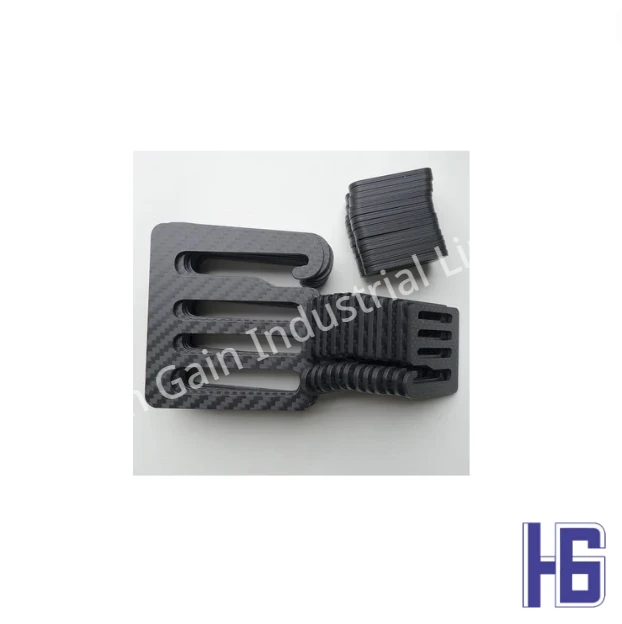
Carbon fiber composite materials are a new type of composite material with carbon fibers as the reinforcement and resin as the matrix. The entire carbon fiber bundle contains fibers with a carbon content exceeding 90%. Compared to glass fibers in composite materials, carbon fibers have significant advantages. In performance comparisons, the density of glass fibers is about one-third higher than that of carbon fibers, but their tensile strength is less than two-thirds of that of carbon fibers. In comparison, carbon fibers have excellent applications across a wider market.
The specific strength and modulus of carbon fibers are much higher than those of high-strength steel and high-strength aluminum alloys. This results in very high specific strength and modulus limits. The terms "specific strength" and "specific modulus" refer to materials that have a small density but possess strong strength and modulus, thereby indicating high specific strength and high specific modulus. As a result, carbon fiber materials find extensive applications in various fields.
One important reason for the popularity of carbon fiber composite materials is significantly related to their performance.
Excellent Mechanical Performance
For high-end industries, lightweight and high strength are critical standards. Carbon fiber composite materials undoubtedly showcase these unique properties. The specific strength of carbon fiber composites can reach 14 times that of steel and over 10 times that of aluminum, while their density is also far lower than other materials. This leads to effective weight reduction in products where weight savings are essential.
For example, in the drone industry, the application of carbon fiber composites greatly reduces the weight of the drone's body, which significantly improves its overall endurance and flight time. With high strength, the internal chips of the drone can be better protected. This advantage is similarly evident in applications within the rail transportation sector.
Anisotropy and Performance Designability
Carbon fiber composite materials can be layered using unidirectional prepreg tapes, resulting in non-uniform and anisotropic properties throughout their dimensions. This means that the performance of unidirectional tapes will differ in vertical and horizontal directions. Layering designs can optimize performance; for instance, areas requiring main load-bearing capabilities may need increased fiber content to achieve superior load-bearing effects.
Due to the excellent flexibility and designability of the fibers, varied shaped components can be effectively produced without requiring secondary welding, greatly enhancing the aesthetic quality of the products.
Multiple Choices for Manufacturing Processes
When producing carbon fiber products from carbon fiber composite materials, there are many manufacturing process options available. The forming processes for carbon fiber products include molding, winding, autoclaving, pultrusion, resin transfer molding, vacuum infusion, hand lay-up, and more. The choice of forming process often depends on factors such as the production of carbon fiber products, material performance, and cost considerations.
For instance, carbon fiber round tubes may use winding and roll-forming processes, while carbon fiber square tubes often adopt roll-forming techniques.
Good Fatigue Resistance
After being formed through laminated processes, carbon fiber products exhibit strong fatigue resistance. When cracks occur, they expand from the surface inward, demonstrating excellent fatigue resistance compared to the fatigue resistance of steel and aluminum.
Excellent Corrosion Resistance
The presence of epoxy resin on the surface of carbon fiber composites provides them with excellent acid and chemical corrosion resistance, offering significant advantages in various challenging environments.
Additionally, many other performance aspects come into play. For example, carbon fiber plates used in medical devices possess strong X-ray transparency, allowing for clearer imaging while reducing radiation exposure. It is these high-performance advantages that enable carbon fiber composite materials to stand out as leaders among high-performance composite materials.