Will the application proportion of thermoplastic carbon fiber in wind power projects increase significantly?
Currently, the development of the carbon fiber industry in China is facing bottlenecks. There is an oversupply of low-end carbon fiber production capacity, which has led to a significant decrease in the prices of standard carbon fiber products due to the impact on downstream industries. Meanwhile, medium and high-end carbon fibers cannot be produced on a large scale due to the higher technical difficulties, resulting in unmet demand in high-end fields such as aerospace. To balance supply and demand, some studies suggest that the steady rise of the wind power industry could absorb a portion of the carbon fiber production capacity. However, what is the actual situation in the wind power industry? Does it require low-end or medium to high-end carbon fiber composites?
Introduction to Carbon Fiber and Resin Matrix in Wind Turbine Blades
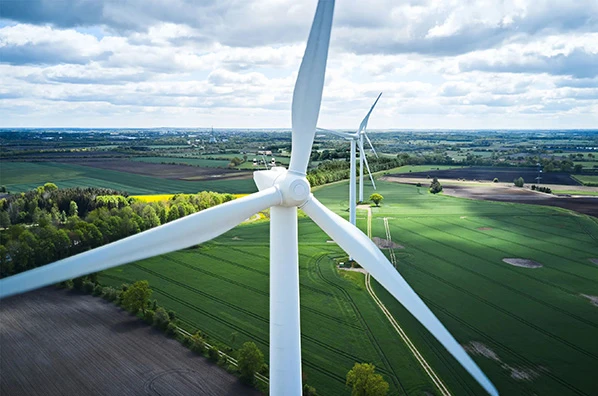
Wind turbines generally consist of components such as the rotor, generator, yaw mechanism, tower, speed-limiting safety devices, and energy storage systems. The rotor is made up of several long blades, which is the core focus of this discussion. Wind turbine blades are primarily composed of core materials, matrix materials, reinforcement materials, and surface coatings. The cost of raw materials in producing a single blade can account for up to 70%, mainly including reinforcing fibers, matrix resins, core materials, structural adhesives, metals, and accessories.
Currently, the reinforcement materials used in wind turbine blades are mainly glass fiber and carbon fiber. As turbine sizes increase, the length of wind turbine blades also grows, leading to higher demands for overall stiffness. The performance of glass fiber reinforcements has gradually reached a bottleneck, at which point the mechanical performance advantages of carbon fiber have begun to emerge. This development trend has allowed carbon fiber and composites to stand out in the wind power industry, and with their inherent advantage of lightweight properties, they may replace glass fiber in the future.
Research from "Application and Development of Composites in Large Wind Turbine Blades" indicates that the modulus of carbon fiber is 3 to 8 times higher than that of glass fiber, while its density is approximately 30% lower. This makes it possible to meet the requirements for both the scaling up and lightweighting of blades. According to projections, the penetration rate of carbon fiber in onshore and offshore wind turbine main beams will gradually increase, and there is a significant necessity for large wind turbine blades using carbon fiber main beams.
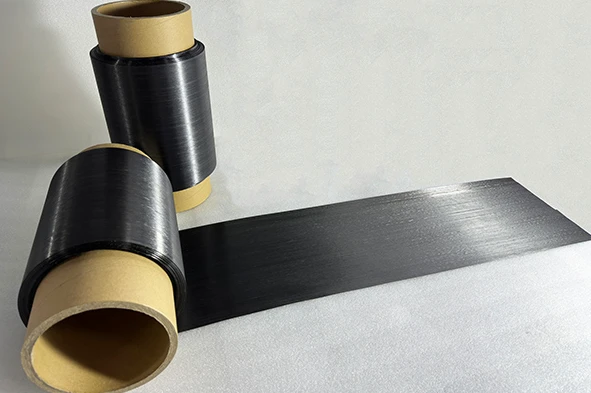
As for the matrix resin in wind turbine blades, epoxy resin and unsaturated polyester resin are the primary materials used. Among these, epoxy resin is currently the main component of thermosetting carbon fiber composites due to its lower preparation difficulty, stable physical form after molding, and excellent overall performance. Therefore, it has become a core part of the current carbon fiber industry. Furthermore, research into various resins has revealed that thermoplastic resins also have a high compatibility with carbon fiber, and they are more conducive to recycling and reuse, making them an important direction for future development.
Can Thermoplastic Carbon Fiber Replace Thermosetting Carbon Fiber in Wind Turbine Blades?
There are many types of thermoplastic resins, including polyether ether ketone (PEEK), polyarylether ketone (PAEK), polyether ketone (PEK), polyphenylene sulfide (PPS), polyamide (PA), and polyether sulfone (PES). The performance of thermoplastic carbon fiber composites formed by these resins combined with carbon fiber varies greatly. Therefore, to widely replace thermosetting carbon fiber in the wind power industry, more research and experiments are needed. Before that, let's first understand the advantages and disadvantages of thermosetting and thermoplastic carbon fibers.
1. Thermosetting Carbon Fiber:
A. Curing Process: Thermosetting carbon fibers undergo a curing process during manufacturing. Once cured, they cannot be reshaped, which is not conducive to secondary processing and recycling.
B. Strength and Stiffness: Thermosetting carbon fibers typically exhibit greater strength and stiffness than some thermoplastic carbon fibers. Additionally, their high-temperature resistance and wear resistance have their own advantages and disadvantages.
C. Brittleness: Compared to thermoplastic carbon fibers, thermosetting carbon fibers may be more brittle and more prone to damage during actual use.
2. Thermoplastic Carbon Fiber:
A. Recyclability: One significant advantage of thermoplastic carbon fibers is their recyclability; they can be melted and reshaped multiple times without substantial loss of mechanical properties.
B. Processing Time: The processing time for thermoplastic carbon fibers is generally shorter than that of thermosetting carbon fibers, and they can be processed using smart manufacturing techniques.
C. Impact Resistance: Thermoplastic carbon fibers demonstrate better impact resistance compared to thermosetting carbon fibers.
3. Practical Application Comparison:
A. Cost: Thermoplastic carbon fibers have advantages in processing, with lower costs once the technology matures, but the high cost of raw materials remains an issue.
B. Technology Maturity: The technology and manufacturing processes for thermoplastic carbon fibers may not be as mature as those for thermosetting carbon fibers, as the former has a shorter development timeline, but it holds greater potential.
In summary, while thermoplastic carbon fibers show significant advantages in certain areas, widespread replacement of thermosetting carbon fibers in wind turbine blades will require further research and development.
Will the Application Proportion of Thermoplastic Carbon Fiber in Wind Power Projects Increase Significantly?
Currently, the application proportion of thermoplastic carbon fiber in wind power projects is quite small, and it is uncertain whether it will significantly increase in the future. This is because the advantages offered by thermosetting carbon fiber composites-such as lightweight properties, high strength, and high stiffness-already meet current usage demands. Even lower-end carbon fibers can provide adequate performance support, which is one reason why lower-end carbon fibers have been introduced into the wind power industry to balance supply and demand in the carbon fiber sector.
However, the wind power industry is developing, and the carbon fiber industry is also evolving. Just as the performance of glass fibers reached a bottleneck, the application of thermosetting carbon fibers in the wind power sector may also encounter limitations in the future. There may be a search for faster processing technologies, more comprehensive performance from carbon fiber composites, and resin matrices that are less polluting to the environment. These are precisely the areas where thermoplastic carbon fibers excel. This is also why many companies and institutions, both domestically and internationally, are committed to researching thermoplastic carbon fibers.