


Woven Carbon Fiber
Woven Carbon Fiber

Product Introduction
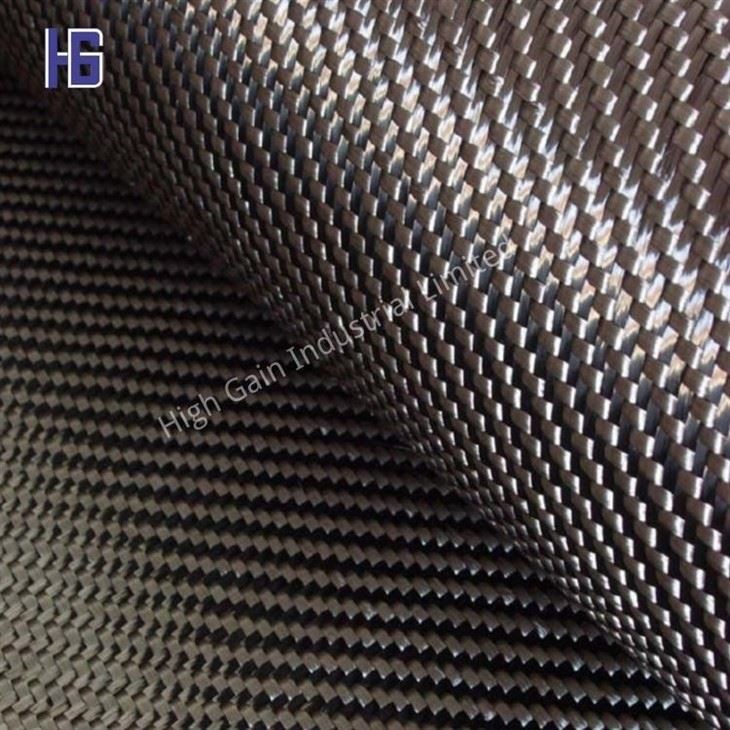
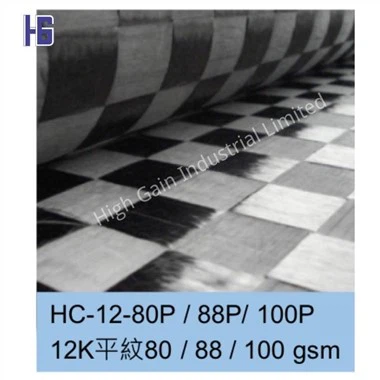
Carbon fiber woven fabrics are created by using carbon fiber yarn to weave different patterns, which can greatly impact the strength and performance of the final product. These patterns, such as plain weave, twill weave, and satin weave, are made by weaving bundles of carbon fiber yarn-commonly known as 1k, 3k, 6k, 8k, and 12k yarn. Among these options, 3K fabric is the most popular choice for its versatility. Plain weave, resembling a chessboard with its symmetrical appearance, is easily identifiable. The weaving process involves interlacing the tow above and below, resulting in very small gaps between the yarns, giving plain weave fabric exceptional stability.
The twill weave pattern is characterized by a diagonal pattern created through a cross pressing technique. This can be represented as either two × 2 or 4 × 4. Essentially, in twill weave, each yarn goes down through two other yarns and then comes up through two other yarns. Similarly, in 4x4 twill cloth, each yarn goes down through four other yarns and then comes up through four other yarns.

Advantages:
Lightweight: Carbon fiber has a density of 1.6-2.1g/cm3, making it significantly lighter than metals like aluminum (2.7g/cm3) and iron (7.8g/cm3).
2. Corrosion resistance and UV protection: Carbon fiber fabrics are ideal for environments with high acidity, alkalinity, salt, and atmospheric corrosion.
3. High strength: Carbon fiber is widely used for reinforcing and repairing various structures such as buildings, bridges, tunnels, structural shapes, seismic reinforcement, and structural node reinforcement. Its construction is convenient and does not require large machinery, wet work, hot work, or on-site fixed facilities.

Manufacturing Process
The manufacturing process of woven carbon fiber involves several key steps:
Precursor Production: The process begins with the production of a precursor material, usually polyacrylonitrile (PAN) or pitch-based carbon fibers. PAN fibers are the most commonly used precursor due to their superior mechanical properties.
Stabilization: The precursor fibers are then heated in an oxygen-deprived environment to remove non-carbon atoms and create a thermally stable structure.
3.Carbonization: The stabilized fibers are heated to extremely high temperatures in an inert atmosphere, causing the remaining non-carbon elements to be driven off, leaving behind pure carbon.

Conclusion
Woven carbon fiber's exceptional strength-to-weight ratio, stiffness, corrosion resistance, and design flexibility make it an invaluable material for a wide range of applications across various industries. As technology and manufacturing processes continue to advance, carbon fiber composites are expected to play an increasingly significant role in enabling innovative and sustainable solutions in engineering and design. In conclusion, the unique properties and versatile applications of woven carbon fiber solidify its position as a transformative material in modern industry, driving advancements in performance, efficiency, and sustainability.
Hot Tags: woven carbon fiber, China woven carbon fiber manufacturers, suppliers, factory, Carbon Fiber Name Card Holder, resin film, composite peel ply, Aramid Fiber Fabrics, composite metallic fabric, carbon fiber car parts
You Might Also Like




Send Inquiry