Advantages and Directions of Thermoplastic Carbon Fiber in Marine Applications.
The Earth we depend on for survival is covered by approximately 70% water, including oceans, bays, lakes, and other bodies of water. Some studies suggest that we originated from the ocean, which also holds unimaginable amounts of resources. To develop and extract these resources from the ocean, not only are advanced technologies and equipment required, but also various materials with strong water resistance and corrosion resistance.
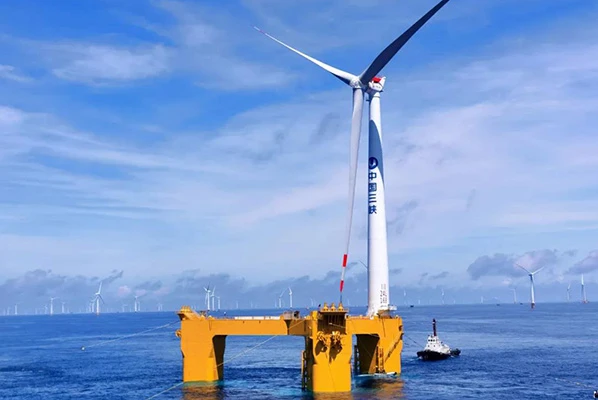
Traditional metal materials, such as steel and aluminum alloys, face the problem of corrosion and rust when used in marine environments for extended periods. Additionally, these metals have a high density, leading to significant challenges in processing and higher transportation costs. Furthermore, maintenance and replacement can also be quite difficult. Introducing fiberglass and carbon fiber composites into marine engineering applications is a forward-thinking and practical initiative.
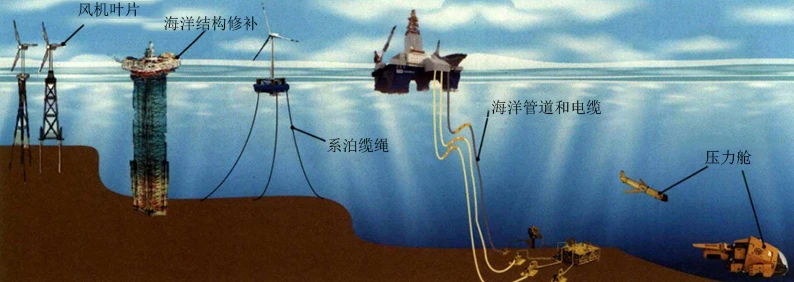
Currently, thermosetting carbon fiber materials are increasingly being used in fields such as marine cables, mooring systems, turbine blades, pressure vessels, and equipment repair. With advancements in carbon fiber technology, thermoplastic carbon fibers have transitioned from concept to reality, offering comprehensive performance advantages over thermosetting carbon fibers. In the future, they are expected to perform even better in marine applications.
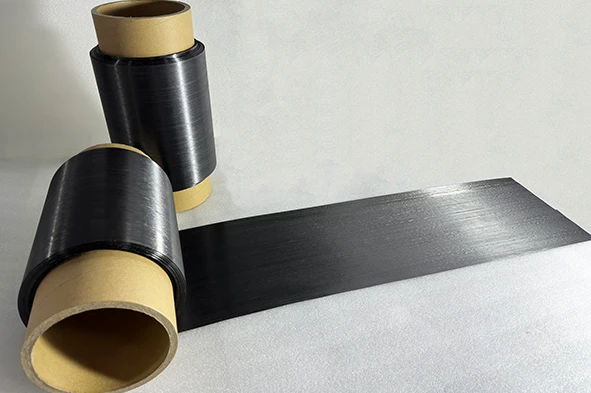
Advantages of Thermoplastic Carbon Fiber in Marine Applications
1.Mechanical Properties: Mechanical properties encompass parameters such as tensile strength, tensile modulus, bending strength, and shear strength, which represent various dimensions of the material's overall performance. For example, CF/PEEK has a tensile strength of up to 1900 MPa, a tensile modulus of up to 110 GPa, a bending strength of up to 125 MPa, a compressive strength of up to 1000 MPa, and a shear strength of up to 75 MPa, demonstrating superior performance compared to other composite materials.
2.Corrosion Resistance: Carbon fiber can function normally in 50% hydrochloric acid, sulfuric acid, and phosphoric acid without deforming or sustaining damage. The corrosion resistance of the resin matrix in thermoplastic carbon fiber composites varies significantly depending on the type of resin used, with polyether ether ketone (PEEK) exhibiting good corrosion resistance. Additionally, proper processing techniques can enhance the corrosion resistance of thermoplastic carbon fibers to some extent. Surface treatments can improve the interfacial bonding strength of the composites, reduce porosity and structural defects, making it more difficult for corrosive media to penetrate and diffuse.
3.Waterproof and Moisture Proof: Thermoplastic resin matrices typically have low moisture absorption, which helps prevent mechanical property degradation due to exposure to humidity. The manufacturing processes for thermoplastic carbon fiber composites often involve methods such as compression molding or injection molding, which can provide more consistent and uniform material performance, including waterproof and moisture-proof characteristics, compared to thermosetting composites.
Advantages of Thermoplastic Carbon Fiber in Marine Applications
1.Mechanical Properties: Mechanical properties encompass parameters such as tensile strength, tensile modulus, bending strength, and shear strength, which represent various dimensions of the material's overall performance. For example, CF/PEEK has a tensile strength of up to 1900 MPa, a tensile modulus of up to 110 GPa, a bending strength of up to 125 MPa, a compressive strength of up to 1000 MPa, and a shear strength of up to 75 MPa, demonstrating superior performance compared to other composite materials.
2.Corrosion Resistance: Carbon fiber can function normally in 50% hydrochloric acid, sulfuric acid, and phosphoric acid without deforming or sustaining damage. The corrosion resistance of the resin matrix in thermoplastic carbon fiber composites varies significantly depending on the type of resin used, with polyether ether ketone (PEEK) exhibiting good corrosion resistance. Additionally, proper processing techniques can enhance the corrosion resistance of thermoplastic carbon fibers to some extent. Surface treatments can improve the interfacial bonding strength of the composites, reduce porosity and structural defects, making it more difficult for corrosive media to penetrate and diffuse.
3.Waterproof and Moisture Proof: Thermoplastic resin matrices typically have low moisture absorption, which helps prevent mechanical property degradation due to exposure to humidity. The manufacturing processes for thermoplastic carbon fiber composites often involve methods such as compression molding or injection molding, which can provide more consistent and uniform material performance, including waterproof and moisture-proof characteristics, compared to thermosetting composites.
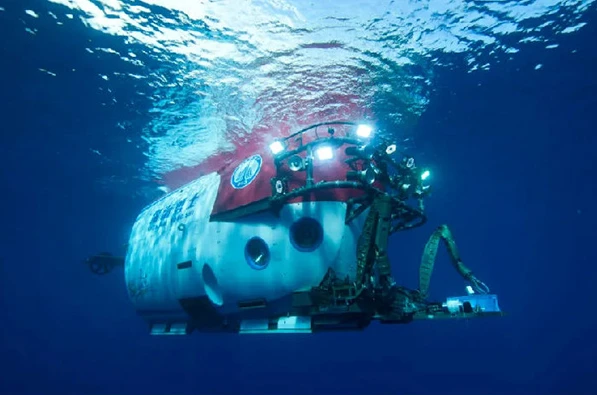
3.Application in Pressure Vessels: Pressure vessels are core components of underwater devices such as submersibles and gliders. The primary design goal for these vessels is to achieve sufficient structural mechanical performance while minimizing weight. Utilizing thermoplastic carbon fiber in pressure vessels can provide advantages such as greater operational depth, lighter weight, and a lower specific gravity for the overall structure.
4.Application in Marine Clean Energy Structures and Equipment: China, being flanked by seas on both sides, has abundant offshore wind resources. Wind power generation is a clean and environmentally friendly new energy industry, and there is significant demand in this field. The production of wind turbine blades heavily relies on carbon fiber composites. It is estimated that by 2025, the demand for carbon fiber in the wind power sector could exceed 93,000 tons, and thermoplastic carbon fiber may play a supplementary role in meeting this demand. The stiffness of thermoplastic carbon fiber composite materials is 2 to 3 times that of glass fiber composites, while their density and mass are generally comparable, making them suitable for manufacturing turbine midsections.
5.Application in Marine Structure Repair and Reinforcement: Marine structures operate in complex and harsh marine environments, continuously subjected to operational loads and environmental stresses. Over their service life, it is inevitable that structural defects, such as fatigue cracks and corrosion issues, will occur. Thermoplastic carbon fiber composites, with their low density, high strength, corrosion resistance, ease of construction, favorable fatigue performance, and non-disruptive impact on structural integrity, have been widely applied in the repair and reinforcement of marine structures.
The resources hidden within the oceans are vast, and current human technological capabilities are not yet sufficient for thorough and extensive exploration. Previously lacking materials and technology, we now have high-performance materials like carbon fiber, as well as techniques capable of withstanding the immense pressures found underwater. With the ongoing advancement of technologies and materials, the aspirations of "reaching for the moon in the sky and capturing turtles from the depths of the ocean" are likely to become a reality.