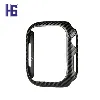
Customizing Production Process and Application of Carbon Fiber Structural Components

Carbon fiber is an advanced material that is widely used in the automotive, aerospace, and other manufacturing industries due to its lightweight and high strength properties. In order to customize the production process and application of carbon fiber structural components, it is important to take a comprehensive approach that includes selecting the right materials, designing the product, and utilizing the right manufacturing technologies.
First and foremost, selecting the right materials is critical to the success of a carbon fiber production process. Carbon fibers have different properties depending on the material used, such as T300, T700, or T1000, and the manufacturing process used. Careful consideration and selection of these materials have a direct impact on the products' performance, lifespan, and cost. A detailed understanding of the desired product and its function is important to prevent over-engineering by selecting stronger materials that are not necessarily needed and instead using more cost-effective materials that satisfy the design requirements.
Once the proper materials are selected, designing the product is the next step. It is important that the product's strength requirements are balanced with the material's weight, which will ultimately impact the performance of the product. To ensure optimal performance, computer-aided design (CAD) software or simulation tools can be used to analyze and optimize the product design. By properly designing these products, it is possible to minimize material waste while maintaining the products' strength.
To manufacture carbon fiber structural components, there are several technologies available. Some of the most popular methods include:
- Resin transfer molding (RTM) which involves infusing liquids into a vacuum mold to form the desired shape;
- Compression molding, which utilizes heat and pressure to mold the carbon fiber into the desired shape;
- Filament winding, which involves winding carbon fiber string or tape around a mold and then curing the resin to form a solid shape; and
- Automated fiber placement (AFP), where a robot places pre-formed carbon fiber pieces onto a mold before undergoing a curing process.
Applying these manufacturing techniques results in different cost and quality outcomes. Therefore, it is essential to choose the technique that is suitable for the desired product.
In conclusion, customizing the production and application of carbon fiber structural components involves taking a comprehensive approach, selecting the right materials, designing the product, and utilizing the right manufacturing technologies. With this approach, the result is high-quality carbon fiber products that meet performance requirements and specifications while also ensuring affordability and sustainability.
High Gain is experienced in producing carbon fiber structural parts that we can assist in structural product design, mold design and making, materials selection and final products making.