Do Carbon Fiber Tubes Age? A Comparison Between Carbon Fiber Tubes and Steel Tubes.
Among the advantages of carbon fiber are its corrosion resistance, abrasion resistance, and high stability. A question recently posed to Weisheng New Materials by a user was whether carbon fiber tubes would age. In this article, we will discuss the topic of aging in carbon fiber tubes, hoping to help everyone gain a better understanding of carbon fiber tubes.
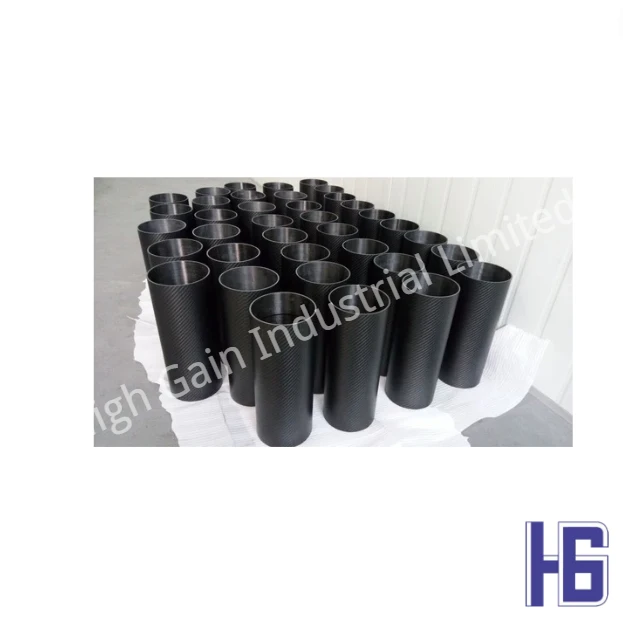
The advantages of carbon fiber tubes are quite apparent, including lightweight, high strength, corrosion resistance, anti-aging properties, and low thermal expansion coefficient. This makes them the primary choice for lightweight applications in many products. However, a question arises: Do carbon fiber tubes age?
The answer is yes, they do age, but the aging process is very slow, giving them excellent anti-aging performance. Let's compare them with common aluminum and steel pipes.
Aluminum Tubes: Comparatively, aluminum tubes have significantly lower strength than steel and carbon fiber tubes. While aluminum exhibits decent anti-aging properties, its low strength limits its application in high-strength structures, as it cannot guarantee quality under such conditions.
Steel Tubes: Steel pipes offer much better strength compared to aluminum and exhibit stable performance. They are also cost-effective, leading to widespread use. However, they are prone to rust and bending, and their higher density makes them particularly susceptible to corrosion in acidic environments, which adversely affects their performance in many fields. Upon learning about carbon fiber tubes, users often choose to replace steel with them.
Carbon Fiber Tubes: The strength of carbon fiber is three times that of steel, while its weight is only one-fifth that of steel. This results in significant advantages in strength and modulus over both steel and aluminum tubes. Moreover, carbon fiber exhibits excellent resistance to corrosion and has a long lifespan. Its downside is that if the load capacity is exceeded, it can show brittleness. However, due to its inherently high load-bearing capacity, this brittleness is not a particularly notable disadvantage. Its corrosion resistance far surpasses that of both steel and aluminum.
In summary, while carbon fiber tubes do age, they do so at a much slower rate compared to steel and aluminum. Aging is a phenomenon that occurs in all materials, influenced by factors such as temperature, wind, and environmental humidity. For example, increased humidity can cause carbon fiber tubes to soften, and exceeding their high-temperature limits can lead to decomposition. Although carbon fiber itself can withstand high temperatures, the resin used in carbon fiber tubes may not have high-temperature resistance. In environments with high humidity and strong acids or bases, the performance of carbon fiber tubes can decline. If moisture penetrates from the cross-section, it can affect the overall performance of the tube. Chemical media typically permeate and diffuse along the surface, interface, and interior, causing changes in the morphology of the composite material's internal and external surfaces.
Therefore, it is essential to pay attention to these factors during use. To ensure stable performance, replacing the tube periodically can be beneficial. In conclusion, carbon fiber does age, but it does so very slowly, making carbon fiber tubes a durable choice for many years.