The Use of Carbon Fiber in Robotic Arms
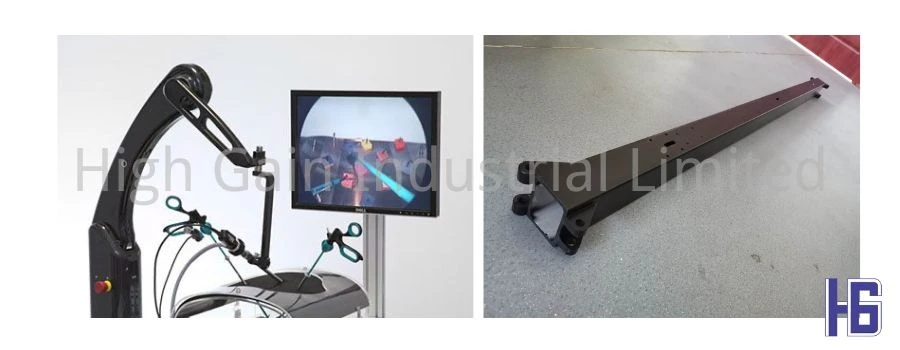
The use of carbon fiber in robotic arms has revolutionized the world of robotics, providing numerous benefits and advancements. Carbon fiber is an incredibly strong and lightweight material that is commonly used in aerospace, automotive, and sporting industries. Its excellent mechanical properties make it ideal for applications where strength and weight are critical factors.
One of the primary advantages of carbon fiber in robotic arms is its weight. Traditional materials like steel and aluminum are much heavier, requiring more power to move the arm. In contrast, carbon fiber arms are significantly lighter, requiring less energy to move, resulting in reduced power consumption and increased efficiency. This energy-saving feature makes carbon fiber arms highly desirable for applications that require long periods of operation and those that require precise movements.
Carbon fiber arms are also strong and have high stiffness, making them ideal for applications where the arm needs to handle heavy loads and maintain precise movements. This strength is particularly useful in manufacturing, where precise movements are essential for exacting tasks such as soldering and welding. With the added benefit of being lightweight, carbon fiber arms can also be used for delicate tasks, such as picking up fragile objects.
Another benefit of using carbon fiber in robotic arms is its resistance to corrosion and wear and tear. Traditional materials such as steel are susceptible to corrosion, which can increase maintenance costs. Carbon fiber arms, on the other hand, are highly resistant to corrosion, reducing maintenance needs and prolonging the life of the arm.
In conclusion, the use of carbon fiber in robotic arms has become increasingly popular due to its strength, lightness, and resistance to wear and tear. Its unique properties offer a range of benefits that are being utilized to improve the efficiency and precision of robotic arms in various applications. As technology continues to evolve and advance, we can expect to see carbon fiber-based robotic arms becoming even more prevalent in the future.