Carbon fiber is widely recognized as a high-tech material, commonly fabricated into tubes, fabrics, rods, and custom machined parts for aerospace, sports equipment, medical devices, and automotive industries. But what exactly is carbon fiber felt? As a sheet-like textile made from interlocked fibers, felt typically serves industrial applications such as gasketing and insulation. Below we explore carbon fiber felt in detail.
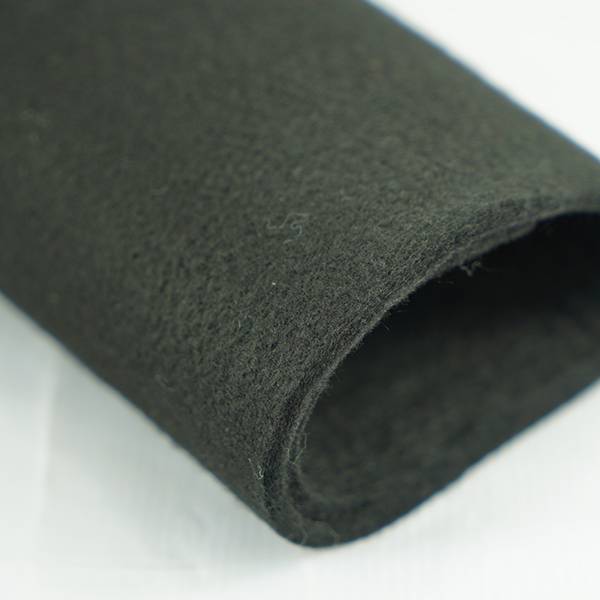
Three primary types exist: polyacrylonitrile (PAN)-based, viscose-based, and pitch-based carbon felts. Among these, PAN-based carbon felt predominates in industrial usage and is generally implied when referring to "carbon fiber felt." PAN-based felts further divide into two subcategories: acrylic fiber-derived felt and precursor fiber-derived felt. Their key distinction lies in the source material-the former uses processed acrylic fibers, while the latter employs raw carbon fiber precursors. Precursor-derived felt exhibits superior performance in strength, texture, ash content, and dimensional stability. Manufacturing methods also influence felt characteristics: some felts use chopped carbon fibers, others utilize pre-oxidized fibers, while certain grades undergo secondary oxidation and carbonization processes.
Classified by texture, carbon felts include soft and rigid variants. Based on processing temperatures, they categorize as carbon felts (lower temperature) or graphite felts (higher temperature), with carbon felts being more cost-effective. Notably, carbon fiber felt demonstrates exceptional adsorption capabilities due to its >90% carbon content-a property inherent to carbon materials. This makes it highly effective for trapping impurities and toxic gases, driving its widespread adoption across industrial applications.