definition
Higher-order carbon fibers refer to carbon fibers with high tensile strength (greater than 4.5 GPa) and high tensile modulus (greater than 250 GPa). Compared with ordinary carbon fiber, high-order carbon fiber is denser in structure and has fewer defects, so it has better mechanical properties and thermal stability.
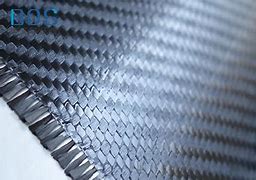
Characteristics of high-end carbon fibers
High strength: The tensile strength of high-grade carbon fiber is 5-7 times that of steel and more than 10 times that of aluminum alloy.
High modulus: The tensile modulus of high-order carbon fiber is 2-3 times that of steel and more than 5 times that of aluminum alloy.
Low density: The density of high-order carbon fiber is only 1.7-2.0 g/cm³, which is 1/4 of steel and 1/2 of aluminum alloy.
High temperature resistance: High-grade carbon fibers can withstand high temperatures above 2000°C in an inert gas environment.
Corrosion resistance: High-order carbon fibers have excellent corrosion resistance to chemical media such as acids, alkalis, and salts.
Low coefficient of expansion: The coefficient of thermal expansion of high-order carbon fibers is close to zero, and the dimensional stability is excellent in the environment of temperature changes.
Electrical and Thermal Conductivity: High-grade carbon fibers have good electrical and thermal conductivity properties and can be adjusted as needed.
The manufacturing process of high-end carbon fiber
The manufacturing process of high-order carbon fiber mainly includes the following steps:
1
>>
Precursor preparation:
High-quality polyacrylonitrile (PAN) or asphalt is selected as raw material, and the precursor is made through spinning, drafting and other processes.
2
>>
Pre-oxidation:
The precursor is pre-oxidized in air at 200-300°C to cross-link its molecular structure to form a stable trapezoidal structure.
3
>>
Carbonization:
The pre-oxidized precursor is heated to 1000-1500°C in an inert gas environment to make its carbon content reach more than 90%.
4
>>
Graphitization:
The carbonized fiber is heated to 2500-3000 °C in an inert gas environment to make its graphite crystallite structure more perfect, and improve the modulus and strength of the fiber.
5
>>
Surface Treatment: Surface treatment of graphitized fibers to improve their interfacial bond strength with the resin matrix.
6
6
Performance indicators of high-grade carbon fiber
| Performance metrics | Numeric value |
| Tensile Strength (GPa) | 4.5-7.0 |
| Tensile modulus (GPa) | 250-400 |
| Density (g/cm鲁) | 1.7-2.0 |
| Elongation at break (%) | 1.5-2.0 |
| Coefficient of Thermal Expansion (10鈦烩伓/K) | -1 |
| Thermal conductivity (W/m路K) | 10~20 |
| Resistivity (惟路cm) | 10⁻³-10⁻⁴ |