Thermoplastic carbon fiber composites represent a significant advancement in materials engineering, combining high-performance carbon fibers with thermoplastic polymer matrices to create a new class of structural materials. Unlike traditional thermoset composites that cure irreversibly through chemical reactions, thermoplastic composites utilize polymers that soften when heated and harden upon cooling, allowing for remolding and repair-a game-changing characteristic in manufacturing sustainability.
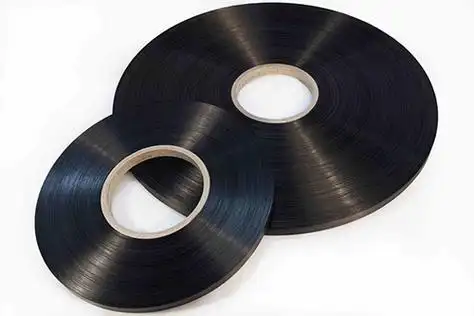
These composites begin with carbon fibers, typically derived from polyacrylonitrile (PAN) precursors through controlled pyrolysis. The fibers are embedded in thermoplastic resins such as polyether ether ketone (PEEK), polyamide (PA), or polyphenylene sulfide (PPS). Manufacturing processes vary, but common methods include melt impregnation-where molten resin coats fiber tows-and hybrid commingling of resin fibers with carbon fibers. The final material forms through compression molding, injection molding, or automated fiber placement (AFP), with cycle times as short as 2 minutes for thin components.
The key advantage lies in their recyclability. Unlike thermoset composites that degrade during recycling, thermoplastic versions can be reheated, reshaped, and reused without significant property loss. This aligns with circular economy goals, particularly in industries like automotive where end-of-life part recovery is critical. Performance-wise, they offer improved impact resistance compared to thermosets due to the inherent toughness of thermoplastic matrices. Aircraft interiors increasingly adopt these materials for cabin components requiring both fire resistance (meeting FAR 25.853 standards) and crash energy absorption.

Industrial applications span drone frames requiring rapid production cycles, medical imaging devices needing X-ray transparency, and automotive battery enclosures where weldability to metal substructures proves advantageous. Challenges remain in achieving thermoset-level fiber-resin adhesion and managing higher material costs, but ongoing developments in in-situ polymerization and hybrid material systems aim to bridge these gaps. As environmental regulations tighten and industries prioritize sustainable manufacturing, thermoplastic carbon fiber composites are poised to transition from niche applications to mainstream adoption, reshaping how we design and recover high-performance materials.