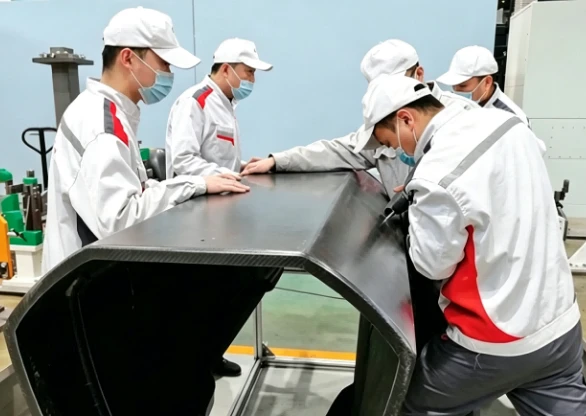
With carbon fiber's outstanding specific strength and anti-corrosion performance, industrial issues of material failure and equipment loss in harsh operating environments are effectively resolved.Carbon fiber boasts a tensile strength exceeding 3000 MPa, several times that of ordinary steel, while its density is only one quarter of steel. Thanks to this ultimate lightweight and high-strength property, it has become the material of choice for all kinds of harsh operating environments.In deep-sea exploration, carbon fiber composite materials are widely adopted to fabricate buoyancy materials and pressure-resistant hulls for 10,000-meter-class submersibles. They can withstand extreme hydrostatic pressure in deep seas over long-term service, while effectively resisting high-salinity seawater corrosion and oxidative aging. Similarly, when applied to high-pressure hydrogen storage cylinders, the carbon fiber reinforcement layers of cylinder bodies are capable of bearing tremendous internal pressure, maintaining structural stability and intact performance even under tens of thousands of frequent gas charging and discharging cycles.
In the civil industrial sector, carbon fiber composite materials have brought aerospace-grade performance down to widespread civilian applications.Carbon fiber industrial rollers are mass-produced at scale and suitable for harsh production environments including high temperature, high humidity, acid and alkali corrosion.Unlike conventional metal rollers plagued by prominent drawbacks such as rust susceptibility, fatigue failure and rapid wear, carbon fiber products deliver exceptional chemical stability, fatigue resistance and weather resistance. They drastically cut equipment failure rates, extend maintenance intervals and service life, and effectively reduce enterprises' production and operation costs.Such consistent and reliable performance under extreme environments constitutes the core competitive advantage that enables carbon fiber to replace traditional metallic materials.