Recently, Firefly Aerospace of the United States announced that it has been awarded a subcontract worth 13 million US dollars by NASA's Jet Propulsion Laboratory (JPL).The enterprise will fabricate a complete set of carbon fiber composite aerodynamic shells for the SkyFall Mars mission slated for 2028.This major development not only marks the official evolution of carbon fiber composites from auxiliary structural parts of spacecraft to core protective assemblies for deep-space landings, but also sends an unambiguous signal to the entire industrial chain: as deep space exploration moves toward regular implementation and commercialization, advanced composite materials have become the fundamental technological underpinning that dictates the success or failure of deep space missions.
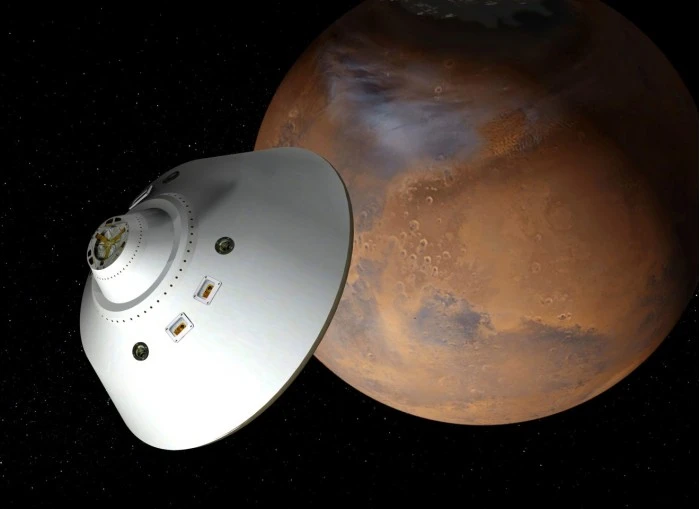
As a manufacturer of carbon fiber products, we have keenly perceived the underlying logic behind this trend.Subjected to Mars' extremely rarefied atmosphere and intense aerodynamic impact at high speeds, the rotor blades of new-generation Mars helicopters must withstand supersonic conditions. Meanwhile, the aerodynamic shells of landing vehicles have to endure drastic high temperatures and violent temperature fluctuations.Meanwhile, the aerodynamic shells of landing vehicles have to endure drastic high temperatures and violent temperature fluctuations.Conventional metallic materials can no longer satisfy the stringent dual requirements of ultimate lightweight design and high strength demanded by such extreme operating conditions. Boasting outstanding customizable formability and excellent resistance to extreme environments, carbon fiber composites are comprehensively reshaping the manufacturing standards for deep space exploration equipment.
From an industrial perspective, the execution of this subcontract signifies that the application of carbon fiber composites in the aerospace sector is accelerating its transition from isolated technological breakthroughs to large-scale mass production across all application scenarios. Composite material penetration is growing exponentially across aerospace hardware, ranging from launch vehicle fuselage structures and spacecraft propellant tanks to the core protective shells for Mars landings as exemplified in this project.Meanwhile, commercial aerospace imposes stringent demands on cost management and delivery lead times. Supply chain enterprises equipped with capabilities including rapid curing, automated molding and high-consistency mass production will embrace an unprecedented window for development.
Against the backdrop of ever-expanding payload limits and diversified mission scenarios for deep-space exploration hardware, as a downstream manufacturer of carbon fiber products, we fully recognize that only by persistently delving into the fabrication processes of high-performance carbon fibers and advancing the precision manufacturing capacity for intricate components can we keep pace with iterative upgrades across the industry.Going forward, we will remain focused on innovations and breakthroughs in material technologies. By delivering carbon fiber products with superior performance, outstanding stability and reliability, we will furnish robust, solid technical support for mankind's ongoing journey into the vast cosmos via global aerospace endeavors.