Carbon Fiber Products: The Revolutionary Choice for the Future of Industry and Life.
Against the backdrop of rapid advancements in modern technology and industry, carbon fiber products have gradually become sought after across various sectors due to their unique advantages such as lightweight, high strength, corrosion resistance, and high-temperature tolerance. This article will delve into the characteristics, production processes, application areas, and future development directions of carbon fiber products, helping readers gain a comprehensive understanding of this emerging material and its wide-ranging applications.
1.Unique Advantages of Carbon Fiber Products
Lightweight and High Strength
Carbon fiber products possess an extremely high specific strength and modulus, with a strength several times that of steel while weighing only a quarter of it. This performance makes carbon fiber products widely used in fields that require reduced weight and high strength.
Corrosion Resistance
Carbon fiber materials exhibit excellent corrosion resistance, allowing them to be used long-term in harsh environments such as acids, alkalis, and salts. This makes carbon fiber products valuable in industries like chemicals and marine engineering.
High-Temperature Resistance
Carbon fiber maintains stable physical properties even in high-temperature environments, with heat resistance far exceeding that of many traditional materials. As a result, carbon fiber products are extensively applied in aerospace and automotive manufacturing, where high temperatures are common.
Excellent Electrical Conductivity
Carbon fiber has good electrical conductivity, making it useful in specialized fields such as electromagnetic shielding and conductive composite materials. This characteristic allows carbon fiber products to be widely utilized in the electronics industry and communication devices.
2.Production Processes of Carbon Fiber Products
Carbon Fiber Prepregs
Carbon fiber prepregs are a critical step in producing carbon fiber products. By impregnating carbon fibers in resin and then undergoing a drying process, they form a semi-cured state of fiber cloth. This step directly affects the quality and performance of the final product.
Laminated Molding
Laminated molding is a key process in the production of carbon fiber products. Multiple layers of carbon fiber prepreg are stacked together, arranged in specific orientations, and cured under high temperature and pressure to ensure that the carbon fiber products exhibit excellent mechanical properties and stability.
Mold Processing
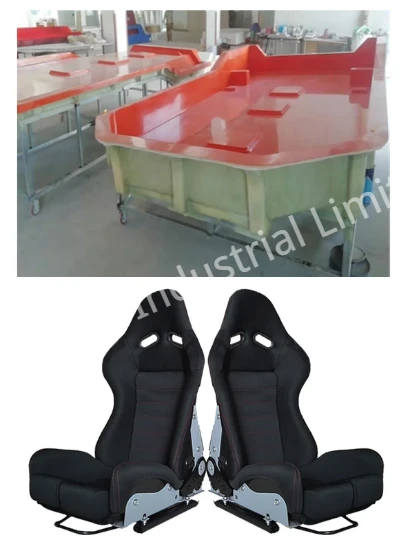
Mold processing is an important step in the production of carbon fiber products. Through precision mold manufacturing techniques, the shape and dimensions of carbon fiber products can be ensured to meet design requirements, providing high precision and consistency.
Surface Treatment
To enhance the appearance and performance of carbon fiber products, surface treatments are usually required, including polishing, spraying, and coating processes. These treatments improve the aesthetics of carbon fiber products and provide better protective features.
3.Application Areas of Carbon Fiber Products
Aerospace
The application of carbon fiber products in the aerospace sector can significantly reduce the weight of aircraft, improving fuel efficiency and flight performance. For example, carbon fiber products are widely used in the wings, tail, and fuselage structures of airplanes, greatly enhancing their performance and safety.
Automotive Manufacturing
In the automotive manufacturing field, the use of carbon fiber products not only reduces vehicle weight and lowers fuel consumption but also enhances vehicle safety and performance. For instance, carbon fiber products are extensively used in the bodies, chassis, and interior components of high-performance sports cars and racing vehicles, significantly improving their performance and aesthetics.
Sports Equipment
Thanks to their lightweight and high-strength characteristics, carbon fiber products are widely used in the manufacture of high-end sports equipment, such as tennis rackets, skis, and bicycles. These sports items not only offer superior performance but also have a longer lifespan.
Construction and Decoration
The application of carbon fiber products in the construction and decoration sectors can provide greater structural strength and durability. For example, carbon fiber products are widely used in structural reinforcement and decorative panels for high-rise buildings, greatly enhancing their aesthetic appeal and safety.
Electronics Industry
Due to their excellent conductivity, carbon fiber products are widely used in the electronics industry, such as electromagnetic shielding materials and conductive composites. These products not only provide outstanding performance but also effectively improve the stability and safety of electronic devices.
4.Future Development of Carbon Fiber Products
Green and Eco-Friendly
With the growing awareness of environmental protection, the production and application of carbon fiber products are moving toward greener and more eco-friendly practices. For example, using environmentally friendly resins and renewable carbon fiber materials can reduce pollution and resource consumption.
Efficient and Low-Cost
The high cost of carbon fiber products has been one of the main factors limiting their large-scale application. In the future, technological innovations and process improvements could significantly lower the production costs of carbon fiber products, promoting their application in more fields.
Intelligent Production
The application of intelligent manufacturing technologies in the production of carbon fiber products can significantly improve production efficiency and product quality. For example, by utilizing industrial robots and automated equipment, efficient and precise processing of carbon fiber products can be achieved, reducing errors and costs associated with manual operations.