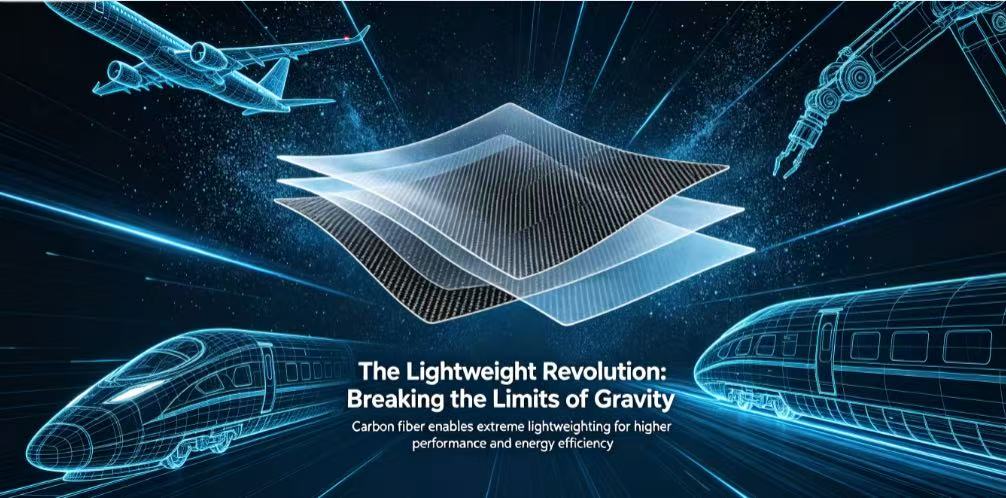
By enabling extreme lightweighting to enhance equipment performance and energy utilization, carbon fiber stands as the core enabler of industrial energy efficiency upgrades.
"Lightweighting" is not merely about weight reduction-it represents the ultimate pursuit of industrial efficiency. This philosophy is most vividly embodied in the aerospace sector. Data shows that modern advanced aircraft, such as the Boeing 787, have reached 50% composite material usage in their airframes.Compared to traditional aluminum alloy structures, the overall weight reduction is significant, directly translating into substantial gains in fuel efficiency. In the realm of rail transportation, China's newly developed heavy-haul freight cars, constructed with carbon fiber reinforced polymer composites, have achieved a self-weight reduction of over 20% compared to similar aluminum alloy models, delivering a dual breakthrough in both payload capacity and energy performance.
The lightweighting advantages of carbon fiber are equally critical in industrial automation.Carbon fiber robotic arms are widely deployed in power grid inspection and industrial manufacturing. Compared to the metal counterparts,carbon fiber components combine high rigidity with dramatically reduced moment of inertia, which means equipment can operate faster, more stably, and with lower energy consumption.For modern factories pursuing both throughput and precision, the hidden benefits of this "weight shedding"-in productivity, energy efficiency, and machining precision-are substantial, representing a core advantage simply unattainable with traditional metals.