On May 17, 2025, the Dongfeng Commercial Aerospace Innovation Test Area witnessed the successful launch of the upgraded Zhuque-2 Y2 carrier rocket. This mission not only marked a breakthrough in China's high-density satellite deployment capabilities but also achieved the milestone of delivering six satellites simultaneously into precise orbits.
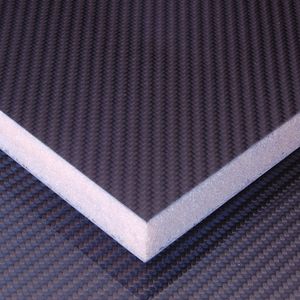
A key innovation was the rocket's carbon fiber composite support module-positioned between the final-stage propulsion unit and satellites-which provided critical structural stability during orbital insertion.
Utilizing a foam sandwich structure design with specialized resin prepreg systems, this advanced module achieved a 42.3% weight reduction over traditional metal frameworks while boosting load-bearing capacity by over 50%, significantly enhancing overall rocket performance.
The mission demonstrates carbon fiber composites' immense potential for reducing launch mass and increasing payload efficiency. This technology advances China's commercial aerospace sector and lays a solid foundation for complex future space missions. As it matures, carbon fiber will undoubtedly play increasingly critical roles in aerospace engineering.