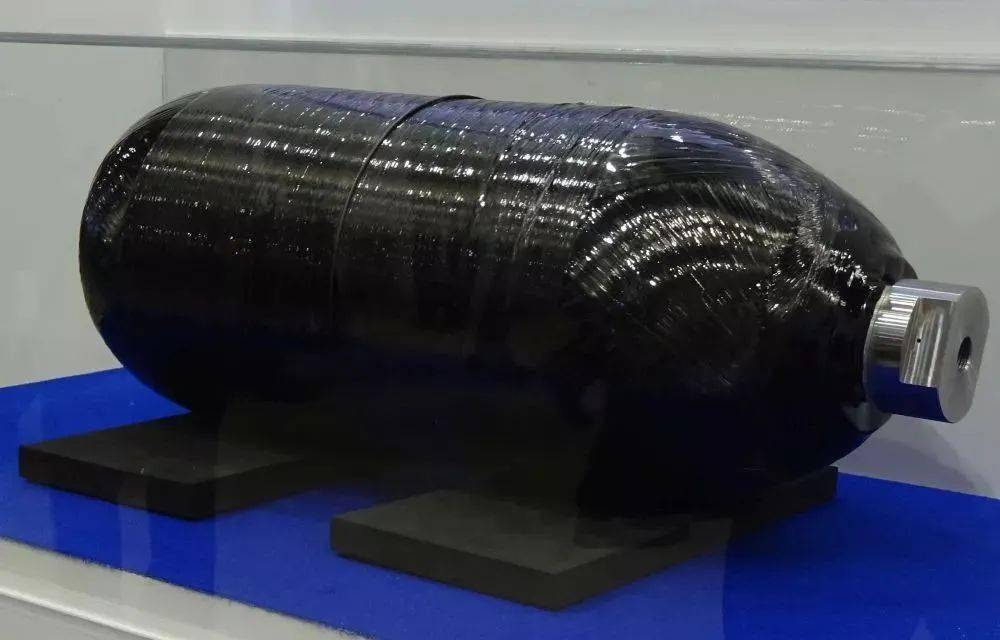
The Beijing Winter Paralympics may be over, but the hydrogen-powered buses transporting athletes, equipped with carbon fiber hydrogen storage tanks, captured the public's attention. As a key direction in new energy development, hydrogen energy has a global market worth hundreds of billions of dollars. Carbon fiber hydrogen storage tanks, which are crucial for hydrogen storage and transportation, are experiencing surging demand in China amid the nation's environmental focus and the rise of new energy such as solar, hydrogen and lithium batteries.
The carbon fiber industry is facing oversupply, but domestic production is growing rapidly. In 2020, China's carbon fiber demand will reach 48,851 tons, while domestic production will only reach 18,500 tons. Projections suggest that China's carbon fiber demand will reach 150,000 tons by 2025, and global demand will reach 200,000 tons that year and 400,000 tons by 2030. In 2020, domestic production will increase by 54.2% year on year to 18,500 tons, following four consecutive years of over 30% growth. Wind turbine blades are currently the main application, accounting for over 40%, while high-pressure hydrogen storage tanks account for only 4%.
Cost is a major challenge for hydrogen storage tanks, with the cost of carbon fiber critical to cost reduction. According to the DOE, current on-board hydrogen storage cylinder costs range from $16/kWh to $21/kWh, with a target of $8/kWh. Carbon fiber accounts for 52% of the cost of a 700 bar IV cylinder. To reach the $8/kWh target, the cost of carbon fiber must drop to $13/kg. In China, Zhongfu Shenying is the main supplier of carbon fiber for hydrogen storage tanks. However, due to oversupply in the industry, the price of carbon fiber for pressure vessels has risen sharply, reaching RMB 151.55/kg in the first half of 2021, up 19.42% year on year.
Hydrogen storage tanks will become a major application for carbon fiber, potentially accounting for more than 30% by 2030. Carbon fiber is key to hydrogen storage systems, accounting for more than 50% of their cost. Data from the Ningbo Institute of Materials of the Chinese Academy of Sciences show that passenger cars use about 75 kg of carbon fiber per vehicle, and commercial vehicles use about 320 kg. Therefore, the estimated cumulative carbon fiber consumption for hydrogen storage tanks in 2022, 2025, and 2030 is 0.32, 3.12, and 295,500 tons, respectively. The annual demand is projected to be 0.2, 1.21, and 95,200 tons for these years, with a global CAGR of 20% for carbon fiber for pressure vessels over the next five years.