Carbon fiber tubes, whether round or square, are marvels of modern engineering-lightweight yet strong, versatile yet precise. But their shape isn't just about looks; it dramatically impacts performance, manufacturing, and real-world applications. Let's unravel the differences.
The Geometry Game
Round Tubes thrive in handling uniform stress. Their circular cross-section distributes pressure evenly in all directions, making them ideal for torsion-heavy tasks like helicopter rotor shafts or bicycle seat posts. The smooth curves also minimize air resistance, a key reason why race car roll cages and drone arms favor round profiles.

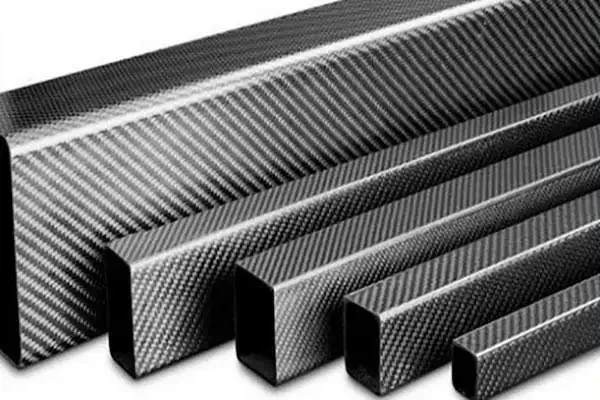
Square Tubes, with their flat sides and 90-degree angles, excel in directional load management. The corners act as natural stiffeners, allowing them to resist bending forces better along specific axes. This makes square tubes the go-to choice for structural frameworks-think robotic arms, solar panel mounts, or custom shelving-where components need to bolt together cleanly.
Strength Secrets
While both shapes leverage carbon fiber's legendary strength-to-weight ratio, their performance diverges under stress:
Round Tubes: Superior in torsional stiffness (resistance to twisting). Lab tests show they withstand 20-30% more torque than square tubes of similar weight.
Square Tubes: Better at bending resistance. Their geometry provides up to 15% higher flexural strength when force is applied perpendicular to a flat face.
Manufacturing Matters
Producing carbon fiber tubes is a dance of heat and pressure:
Round Tubes: Often made via filament winding-carbon strands are spun around a rotating mandrel. This method ensures consistent wall thickness and fiber alignment.
Square Tubes: Typically formed using compression molding. Layers of carbon fabric are pressed into a square mold, which can create weak points at corners if not engineered carefully.
This explains why round tubes are generally 10-15% cheaper to produce at scale.
Real-World Choices
When to Go Round:
Rotating parts (propellers, drive shafts)
Aerodynamic applications (bike frames, aerospace)
High-pressure fluid systems (hydraulic lines)
When to Go Square:
Modular structures (workstation frames, drone chassis)
Load-bearing joints (furniture, architectural supports)
Mounting surfaces (camera rigs, machinery guards)
The Hybrid Edge
Innovators are blending both worlds. For example, oval tubes merge the aerodynamics of rounds with the mounting ease of squares, while hexagonal tubes offer multi-axis stiffness. 3D-printed carbon fiber connectors now let engineers mix shapes in one assembly.
Final Note
Choosing between round and square isn't about "better"-it's about matching geometry to your project's physics. Round tubes sing in dynamic, rotating environments; square tubes anchor static, multi-directional loads. In carbon fiber's universe, shape isn't just form-it's function engineered to perfection.