Connection between Carbon Fiber and Metal Parts
As the application of carbon fiber tubes in various fields such as aerospace, automotive industry, medical devices, and various equipment continues to emerge, carbon fiber tubes are increasingly replacing steel, aluminum, and other materials in certain parts of structures. This inevitably leads to bonding issues between carbon fiber and metals. In this article, we will explore the connection between carbon fiber tubes and metal parts.
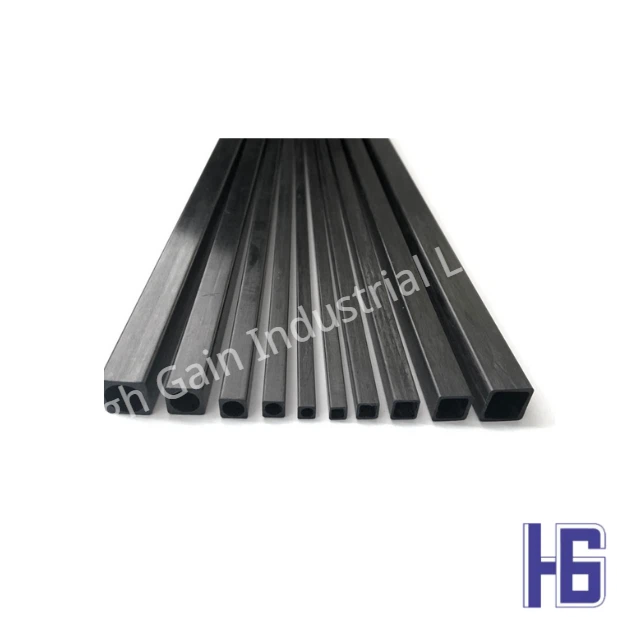
Whether it is the bonding between fiber-reinforced materials or the bonding between composite components and metal materials, two primary methods can be used: adhesive bonding and mechanical fastening. These two bonding methods can be used independently or in conjunction to complement each other. For components that require high strength, mechanical fastening is typically employed, which necessitates drilling holes in the carbon fiber tubes. Mechanical connections can transmit larger loads, facilitate disassembly, and allow for inspection and maintenance, ensuring the safe and effective use of the structure.
The greatest characteristic of adhesive bonding is its "simplicity." The raw material used is an adhesive, which does not require specialized forming equipment and can achieve bonding without operating in challenging conditions. It also does not necessitate additional hardware, and the structural weight itself generally does not create a potential difference with other materials, thereby minimizing the risk of electrochemical corrosion. However, the downside is that in certain applications, adhesives cannot carry loads together; adhesive strength may not be very high, and the adhesive itself can be easily affected by environmental conditions.