Expansion of carbon fiber applications - aerospace helicopter blades, or landing on Mars.
NASA's Ingenuity Mars helicopter is exploring the Jezero Crater on Mars, while NASA engineers are testing carbon fiber blades on Earth for the next generation of Mars helicopters. These helicopters are designed to surpass the performance of Ingenuity, particularly for the Mars sample return mission planned for the 2030s.

The atmospheric pressure on the surface of Mars is less than 1% of that on Earth, and its surface gravity is about one-third. Due to this extremely low surface pressure, Ingenuity's rotor speed must be between 2400 and 2900 revolutions per minute (rpm) to fly on Mars. This is significantly higher than on Earth, where helicopters typically only require 500 to 600 rpm to fly.
Ingenuity features four carbon fiber blades arranged in two counter-rotating rotors, which means they spin in opposite directions, with a span of 1.2 meters and operating at the aforementioned rotor speeds of 2400 to 2900 rpm. Additionally, Ingenuity weighs approximately 1.8 kilograms on Earth, but due to Mars' gravity being only one-third that of Earth's, it weighs only 0.68 kilograms on the Martian surface.
For the next generation of Mars helicopters, engineers at NASA's Jet Propulsion Laboratory (JPL) in Pasadena are designing blades that are 10 centimeters longer than those of Ingenuity, featuring different designs and greater strength.
Advantages of Carbon Fiber in Aerospace Applications
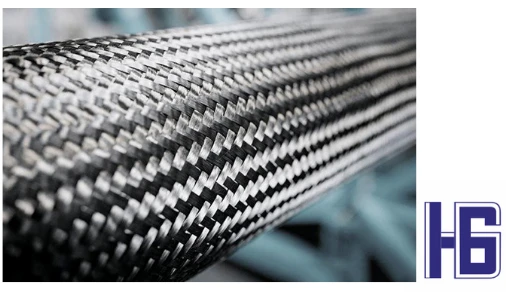
Carbon fiber composites offer several performance advantages in the aerospace industry that traditional metal materials do not possess, allowing them to effectively perform under the harsh conditions of space and provide long-lasting use.
High Strength-to-Weight Ratio: Carbon fiber composites are renowned for their exceptional strength-to-weight ratio. This characteristic enables aerospace engineers to design lightweight structures without compromising strength, thereby improving fuel efficiency and overall performance.
Stiffness: Carbon fiber inherently possesses stiffness, providing excellent structural integrity. This rigidity is crucial in aerospace applications, where components must maintain their shape and resist deformation under aerodynamic and mechanical loads.
Fatigue Resistance: Carbon fiber composites exhibit good fatigue resistance, making them suitable for components subjected to cyclic loads, such as wing and fuselage structures. This property helps enhance the lifespan and durability of aerospace structures.
Corrosion Resistance: Unlike metals, carbon fiber does not corrode, which is advantageous for aerospace applications that are frequently exposed to harsh environmental conditions (e.g., high altitudes and varying temperatures).
Design Flexibility: Carbon fiber composites can be molded into complex shapes, allowing for greater design flexibility. This is particularly beneficial in the aerospace field, where aerodynamic and structural considerations often require intricate and streamlined designs.
Electrical Conductivity: Carbon fiber exhibits electrical conductivity, which can be beneficial for certain aerospace applications, helping to dissipate static electricity and electromagnetic interference, thereby providing additional functionality in aircraft design.
Thermal Stability: Carbon fiber composites demonstrate good thermal stability, enabling them to withstand high temperatures without significant degradation. This characteristic is critical in aerospace applications, as components may be exposed to extreme heat during flight.
Reduced Maintenance Costs: The durability and corrosion resistance of carbon fiber composites contribute to lower maintenance costs for aerospace components over their entire lifecycle, extending maintenance intervals and enhancing reliability.