The low altitude economic policy has arrived, which may drive the rapid growth of the carbon fiber market.
According to Xinhua News Agency, the scale of China's low altitude economy will exceed 500 billion yuan in 2023; According to the Civil Aviation Administration of China, the market size of China's low altitude economy is expected to reach 1.5 trillion yuan by 2025 and 3.5 trillion yuan by 2035.

According to the China Development and Reform Daily directly under the National Development and Reform Commission, the definition of "low altitude" refers to the airspace within a vertical distance of 1000 meters from the ground level directly below, which can be extended to 3000 meters according to the characteristics and actual needs of different regions. Low altitude economy refers to economic activities based on this part of the airspace, including civilian manned and unmanned aerial vehicles, as well as multi scenario low altitude flight activities such as manned, cargo and other operations, and related fields driven by radiation.
Electric vertical takeoff and landing (eVTOL) aircraft is one of the important carriers of low altitude economy, which has significant advantages over traditional aircraft in terms of flight safety, environmental protection, and comfort experience. Carbon fiber is the main structural material for eVTOL, meeting the requirements of lightweight and high strength. Carbon fiber is widely used in the aerospace industry. With its excellent properties such as light weight, high strength, high modulus, and corrosion resistance, it can effectively reduce the weight of the aircraft while ensuring material strength, improve the performance and economic benefits of aircraft, and replace traditional metal materials.
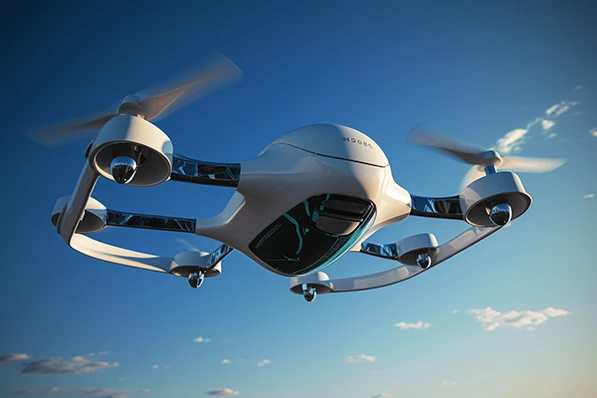
The mainstream eVTOL design schemes all use carbon fiber as the main structural material for the fuselage. According to Stratview data cited by the China Composite Materials Industry Association, over 90% of the composite materials used in aerial vehicles are carbon fiber, while the remaining 10% are fiberglass. From the perspective of composite application scenarios, about 75-80% of them are used for structural components and propulsion systems, followed by internal applications such as crossbeams and seat structures accounting for 12-14%, and battery systems, avionics equipment, and other small applications accounting for 8-12%. According to the design plans released by leading eVTOL manufacturers in China, such as Yihang Intelligent, Xiaopeng Huitian, and Fengfei Aviation, the fuselage structure is made of carbon fiber composite, and the rotor blades and landing gear of Xiaopeng Huitian Traveler X2 are also made of carbon fiber composite.
According to the China Composite Industry Association, eVTOL uses composite materials that account for over 70% of its own weight, with over 90% of the composite materials being carbon fiber. We reasonably assume that the weight of a single eVTOL composite material accounts for 70% of its body structure weight, carbon fiber composite material accounts for 90% of all composite materials, and the carbon fiber: resin ratio is 7:3. Therefore, the carbon fiber demand for a single eVTOL is approximately between 97-363kg.
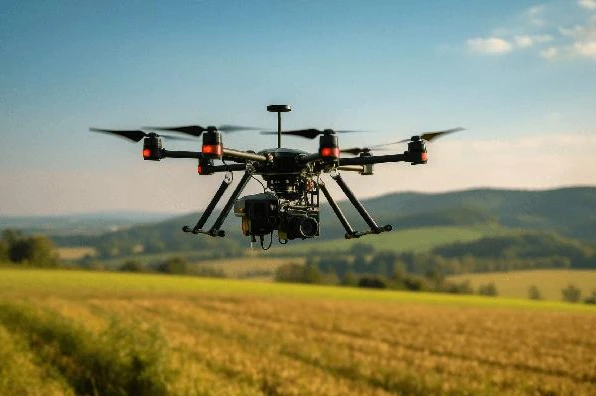
According to data from global aviation data consulting firm Cirium, as of May 2023, there were approximately 8000 orders for future air traffic worldwide, including 1700 commercial electric aircraft and the remaining approximately 6300 eVTOL orders. Assuming all orders are released before 2030, it is expected to bring an incremental demand of 600-2300 tons for carbon fiber.