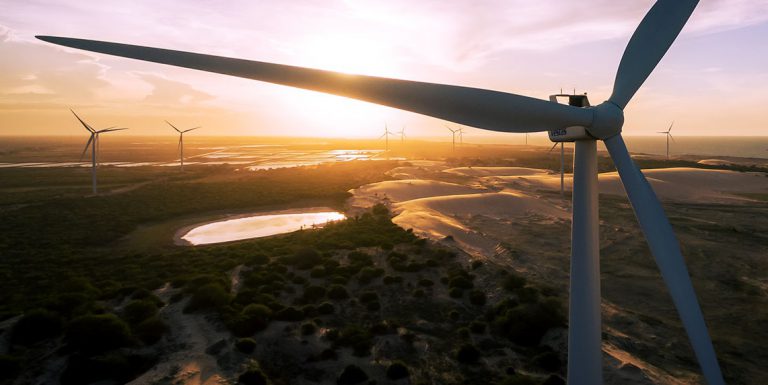
Wind energy is an important part of the clean, sustainable electricity mix. Those slowly turning wind turbine blades that people see at wind farms are mainly made by hand, and low-cost labor has kept most of this manufacturing industry outside the United States.

The U.S. Department of Energy believes that only through automation can this important American industry be strengthened and sustained, cost-effective production be achieved, and the application of wind energy in the United States be expanded.
The U.S. Department of Energy (DOE) recently announced that it will grant $28.49 million to Purdue University (West Lafayette, Indiana, USA) Composite Manufacturing Simulation Center N (CMSC) and its industry partners Themwood Co., Ltd. (Dell, Illinois, USA), TPI Composites Co., Ltd. (Scottsdale, Arizona, USA), Dassault Svstèmes (Waltham, Massachusetts, USA) DimensionalInnovations (Overland Park, Kansas, USA) and Techmer PM (Clinton, Tennessee, USA) to provide funding.
3D printing technology has previously been used in the manufacturing process of wind turbine towers. Based on its rich experience in 3D printing of aircraft engine and gas turbine parts, GE and its partners began to try to use 3D printing and high-performance concrete to manufacture wind turbine towers last year. According to calculations, by raising a 5MW wind turbine from a height of 80 meters to a height of 160 meters, wind farm operators can increase power generation by at least 30%.
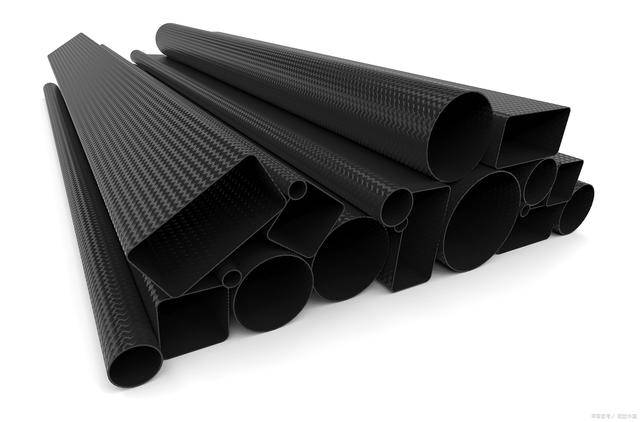
Composite materials can meet the requirements of variable cross-section and large curvature of blades. Carbon fiber-reinforced composite materials have become optional materials for large blades, making wind turbine blades the world's largest composite monomer components. Material selection is completed when the blade structure design is finalized, but the latest blade design concept is to put the material in front and form a multi-objective integrated innovation with aerodynamics and structure to find the best power generation, load, and cost for optimizing the matching of blades and main engines.
At present, the design of blades below 8.0 MW is mainly a glass fiber-based material system, and offshore blades above 12 MW must consider the application of carbon fiber main beams for design.