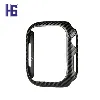
Carbon fibers are remarkably thin-approximately one-fiftieth the diameter of a human hair. When bundled together, they form carbon fiber fabrics, tubes, and custom components widely used across industries. Common specifications fall into three categories: K, T, and M. Here's an explanation of their meanings.

K Specification: Filament Count
The "K" designation indicates the number of individual filaments within a single carbon fiber strand. For instance, 1K represents 1,000 filaments per strand, while 3K denotes 3,000 filaments. Thus, "K" effectively stands for "thousand." Standard specifications include 1K, 3K, 6K, and 12K. Notably, lower K-values (e.g., 1K) correlate with reduced strength but higher cost, creating an inverse relationship between these two factors.
T Specification: Strength Grade
The "T" classification originates from Toray, Japan's industry-leading carbon fiber manufacturer. Models such as T300, T600, T700, T800, and T1000 represent ascending levels of tensile strength-T300 being the lowest and T1000 the highest. A critical distinction is that grades T600 and above are exclusively produced in 12K or larger bundles, whereas T300 materials are available in smaller configurations like 1K and 3K.
M Specification: Modulus Grade
"M" designates modulus (stiffness), with common models including M35J, M50J, and M60J-the latter offering the highest modulus. In China's industrial landscape, T-series carbon fibers dominate civilian applications, while M-series remains primarily reserved for aerospace.
Understanding these specifications is essential for selecting appropriate materials and avoiding misguided purchases.
About High Gain Industrial Co., Ltd.
As an integrated developer and manufacturer of carbon fiber components, High Gain serves sectors ranging from automotive and medical devices to rail transit. We engineer customized materials with specialized properties-including electromagnetic shielding, flame resistance, and high-temperature tolerance-while producing core products such as carbon fiber sheets, tubes, and precision-machined parts tailored to industrial demands.