A groundbreaking new material has emerged in the world of advanced composites: auxetic honeycomb composites made from 3D woven carbon fiber. This pioneering development marks a significant leap forward in materials science, offering remarkable mechanical properties that could transform industries ranging from aerospace to automotive and sports equipment.
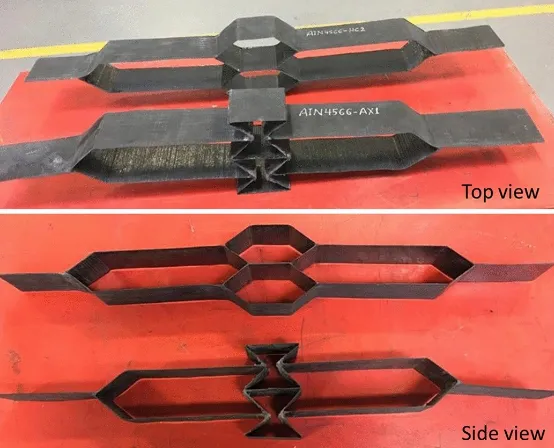
Auxetic materials are unique because they exhibit a negative Poisson's ratio, which means that they expand laterally when stretched, rather than contracting like most conventional materials. This distinctive behavior endows auxetic materials with enhanced durability, resilience, and energy absorption capabilities. When combined with the honeycomb structure-a configuration known for its lightweight strength and stability-this new composite material achieves unprecedented levels of strength and flexibility.

The Role of 3D Woven Carbon Fiber
The core of this innovation lies in the use of 3D woven carbon fiber preforms. Unlike traditional carbon fiber, which is typically woven in two dimensions, 3D woven carbon fiber is interlaced in a three-dimensional pattern. This unique structure not only reinforces the material's strength but also allows it to retain its shape better under stress. By utilizing carbon fiber, the composite maintains an impressive strength-to-weight ratio, essential for applications requiring lightweight yet robust materials.
The 3D weaving process allows the fibers to be oriented in multiple directions, enhancing the material's capacity to withstand multi-axial loads. Additionally, it offers designers more flexibility in shaping components, providing them with greater control over the mechanical properties of the final product.
Applications and Advantages
One of the most promising aspects of this auxetic honeycomb composite is its versatility across various applications. In the aerospace industry, for example, the material's high energy absorption and damage tolerance make it an ideal candidate for impact-resistant panels, cabin interiors, and protective gear. For the automotive sector, this composite could contribute to the production of lighter, more durable components, thus improving fuel efficiency and safety.
Furthermore, the material's ability to withstand extreme temperatures and harsh environmental conditions opens doors to uses in sporting equipment and personal protective gear. Helmets, for instance, could benefit from the material's high impact absorption, potentially reducing injuries for athletes and first responders alike.

A Sustainable Solution
Aside from its functional advantages, the composite material also offers sustainability benefits. Carbon fiber is known for its durability and long lifespan, which means that components made from this material will need to be replaced less frequently. This durability, combined with the lightweight nature of the material, can reduce overall fuel consumption and carbon emissions in transportation applications, aligning with global sustainability goals.
A New Frontier in Material Science
As researchers continue to explore and enhance auxetic honeycomb composites made from 3D woven carbon fiber, the potential for innovation grows. This material not only reflects an engineering marvel but also embodies the future of versatile, high-performance composites. With continuous advancements, it could soon become a staple in industries that prioritize strength, durability, and efficiency.