Recent developments in 3D weaving technology have revolutionized the production of intricate shapes and opened up new markets for sectors in need of affordable and lightweight materials. Manufacturers can now create elaborately woven structures that are strong and resilient while also drastically lowering weight and manufacturing costs thanks to a revolutionary technique called 3D weaving.
3D weaving: what is it?
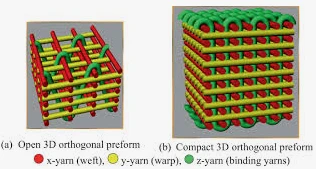
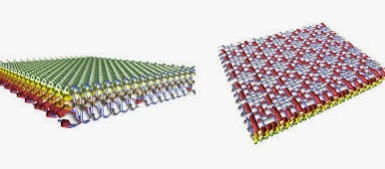
The production technique known as 3D weaving creates a single, solid item by interlacing many layers of fibers in three dimensions. In contrast to conventional weaving, which usually produces flat, two-dimensional textiles, 3D weaving gives the structure depth and intricacy. This technique weaves fibers into designs that may extend along the length, breadth, and height axes using specialized looms. This invention is especially helpful for sectors like sports equipment manufacture, automobile, and aircraft where strong but lightweight materials are crucial.
3D Weaving's Advantages for Complex Forms
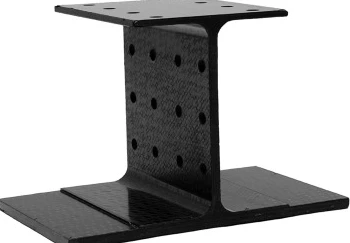
The capacity of 3D weaving to create intricate designs that are impossible or difficult to accomplish with traditional techniques is one of its many noteworthy benefits. 3D weaving architectures provide materials the strength and durability required for dependable performance in sectors like aerospace, where materials must survive harsh conditions without adding undue weight. Additionally, by removing the need for several components, the technique allows manufacturers to develop single-piece structures, which lowers assembly time, labor costs, and total expenses.
In comparison to conventional materials, 3D woven composites may cut weight by around 30% and material costs by up to 25%, according a recent research by the Institute of Advanced Textile Technology. The automobile sector, which is dealing with rising demands for lightweight, fuel-efficient cars, would especially benefit from this. Automakers may drastically cut the weight of their cars without sacrificing durability or safety by using 3D weaved materials, which will increase fuel economy and lower emissions.
Sustainability and Cost Savings
The 3D weaving method has cost-saving advantages in addition to weight reduction. By using carefully measured fibers that are weaved into a final shape, the technique reduces waste by utilizing less material. Conventional techniques often need for joining or clipping, which might leave behind material that is wasted. The effectiveness of 3D weaving lowers waste, energy, and resource consumption throughout the production process, which promotes sustainability.
Furthermore, the woven materials provide a longer lifetime and increased durability due to their common composition of high-performance fibers like carbon or glass, which lessens the need for frequent replacements. Because of this feature, 3D woven composites are a desirable choice for industries where upkeep expenses may be a major hardship.
A Revolution in Several Industries
The use of 3D weaving technology is being propelled by the expanding need for strong, lightweight materials in a variety of sectors. The technology promises to transform not just manufacturing processes but also the performance standards of a broad variety of items as businesses continue to investigate the potential of 3D woven shapes.
Applications for 3D weaving are many and diverse, ranging from sports equipment and medical gadgets to aerospace and automobiles. 3D weaving is positioned to be a game-changer, providing effective and sustainable solutions to satisfy contemporary production needs due to its capacity to decrease expenses, decrease weight, and improve material strength. We anticipate seeing increasingly more sectors use 3D weaving as technology advances to produce the next generation of lightweight, high-performance goods.